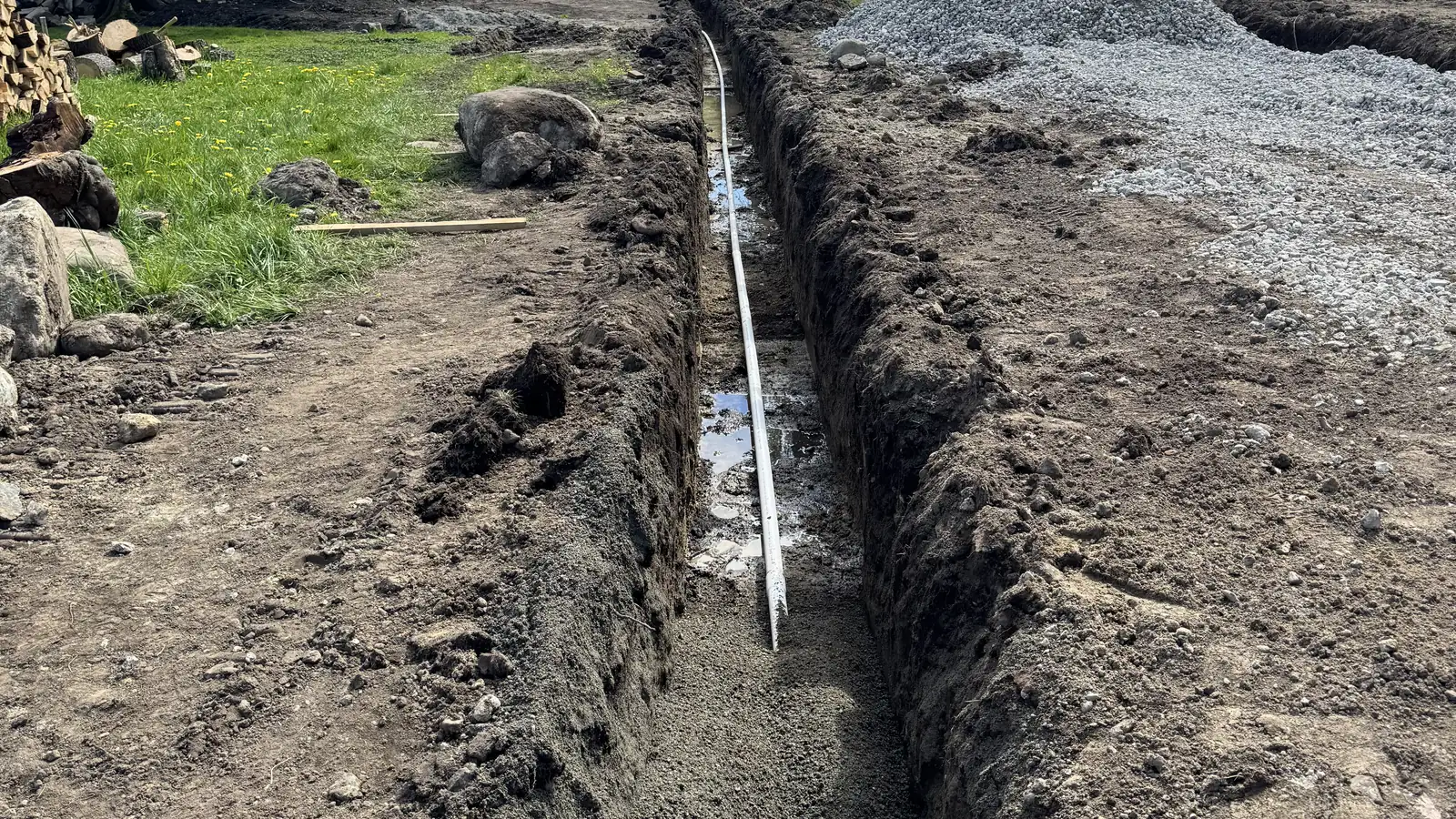
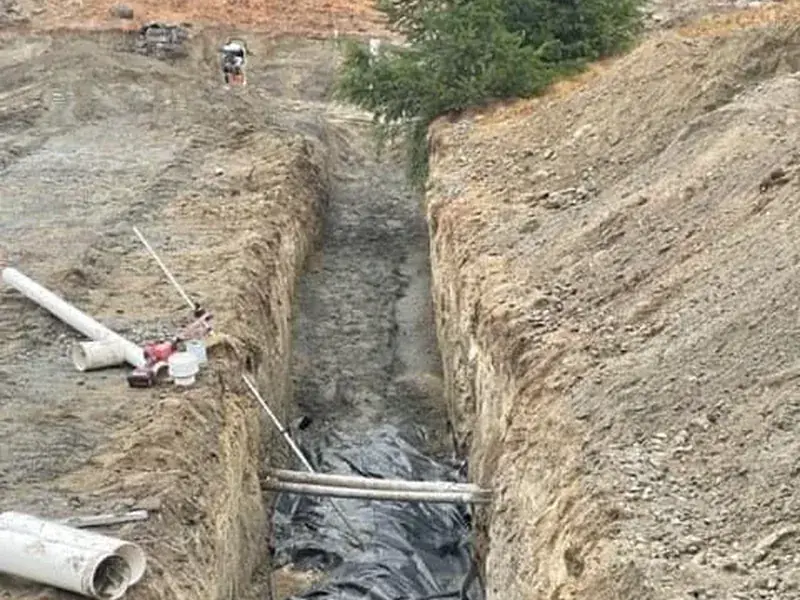
Drainage Solutions
French drains, footing drains, infiltration systems, culverts, and swales, engineered to move water off your property and away from your foundation.
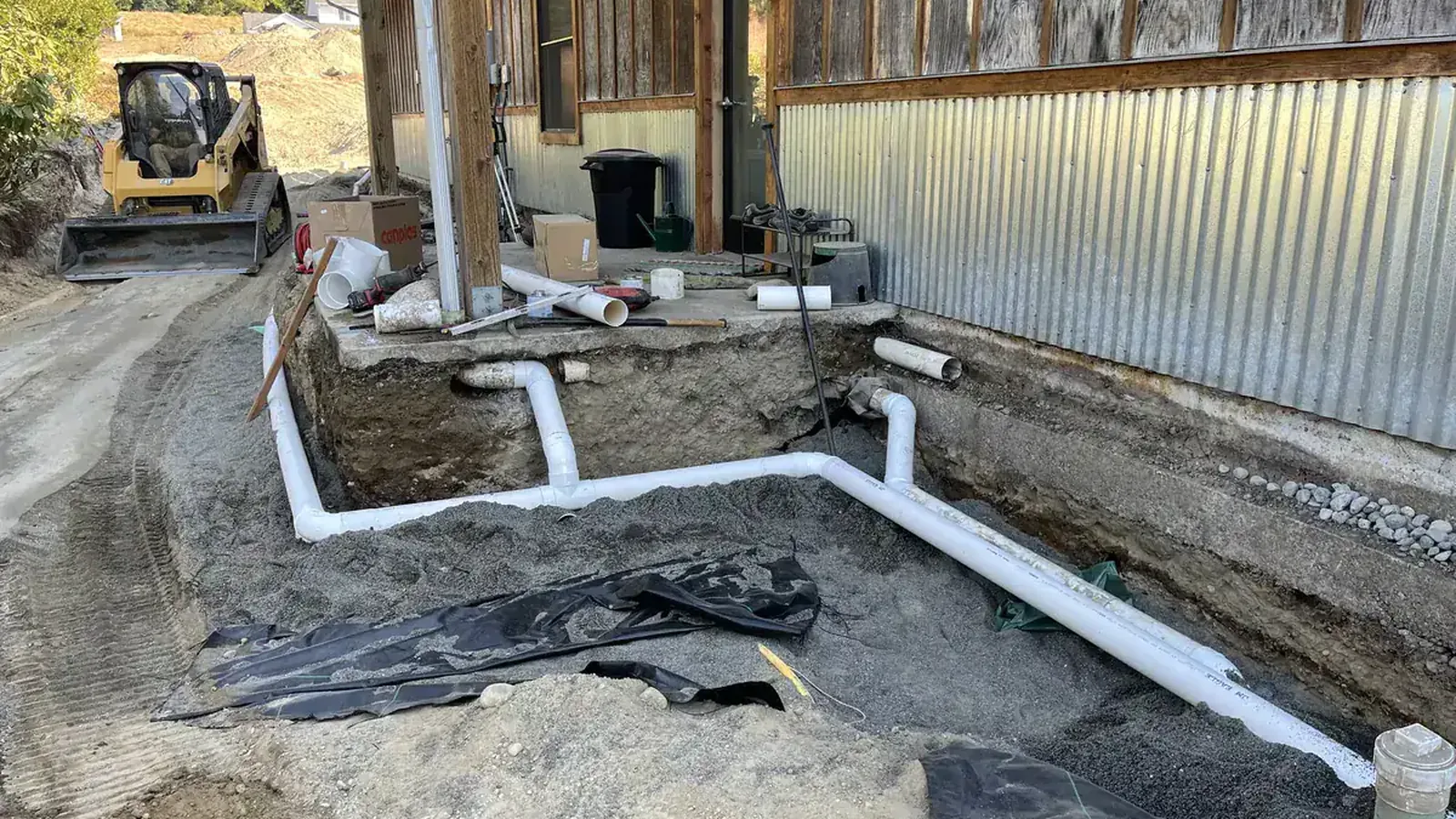
Footing drains for new foundations and replacements around older houses, on Whidbey Island, Camano Island and north into Skagit County.
Footing drain installation on Whidbey Island and Camano Island moves water away from the foundation. Footing drains are also called foundation drains, perimeter drains or drain tile, a name that today means perforated plastic pipe. On a new house, we set the drain beside the footing before backfill. Around a finished house with a wet crawlspace or basement, we replace a clogged or crushed drain. Where there is none, we add one. The outlet can daylight at least 10 feet from the foundation or end in a drywell.
This page covers the drain at the footing and its outlet pipe. Water across the rest of the lot belongs with drainage solutions for the whole property. A soggy lawn or a wet slope may need a French drain or curtain drain built for your lot. The foundation itself, poured concrete footings and stem walls, has its own page. The company came out of custom home building on the island, so on a new foundation we set the drain right after the pour.
Tell us about your project — we’ll get right back to you.
Washington adopts the 2021 International Residential Code and leaves its footing drain rule unchanged. That rule, R405.1, requires drains around concrete or masonry foundations that hold back earth. It applies where those walls also enclose living or usable space below grade. Foundations on well-drained ground or sand and gravel soils, the code's Group I, are exempt. Ask the county or city whether your lot qualifies. The drain goes in after excavation and site prep for a new house and the foundation pour, before backfill.
Under the topsoil, much of the island is dense glacial till, known locally as hardpan. Rain that soaks in perches on the hardpan, then travels sideways until it meets the foundation. Clean sand, till, cobble and groundwater can all turn up on one lot. One sign of a missing, clogged or broken footing drain is water collecting in the crawlspace or basement. That water can have other causes too, so we look at the ground with you before any digging.
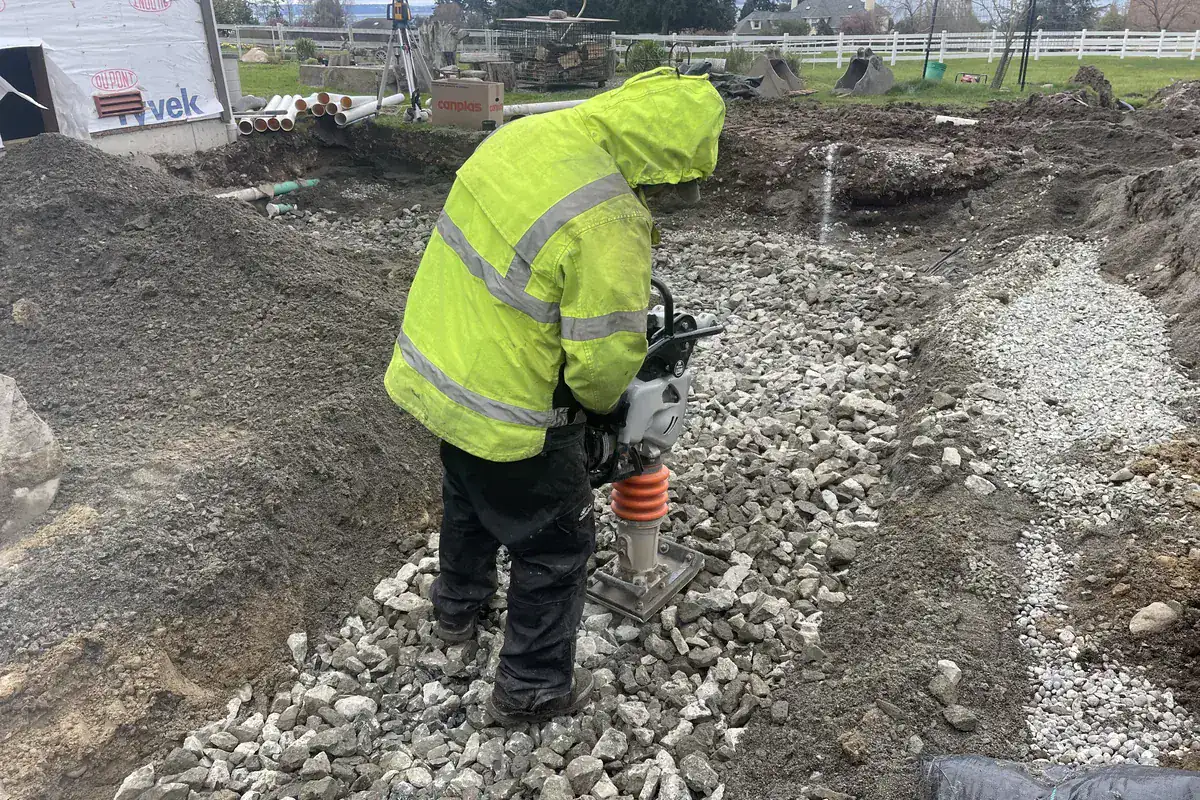
The pipe sits beside the footing, not on top of it, and no higher than the footing's top. It rests on at least 2 inches of washed rock, perforations facing down. At least 6 inches of the same rock goes over it. Filter fabric wraps the pipe or covers the rock above it. The rock reaches at least 1 foot past the footing's outside edge and 6 inches above its top. Those are the code's figures for a gravel drain.
The rock has to be free of fines, since silt and sand clog the perforations. It should also be at least one sieve size larger than those holes. The pipe circles the whole house with a slight slope to one collection point. From there a solid pipe runs to the outlet. A storm sewer outlet needs local government approval. Backfill follows, then regrading the ground so it falls away from the house. The code asks for a drop of at least 6 inches in the first 10 feet.
An older house may have no footing drain. Or its drain has clogged with dirt or roots, or broken during landscaping or later digging. Water in a crawlspace can have other causes, so we check those with you first. We look at the gutters and downspouts, and for plumbing leaks or wall cracks that let water in. The grade, patios, walks and driveway should slope away from the house or have drains. If the drain is at fault, we dig around the house, ideally down to the footing.
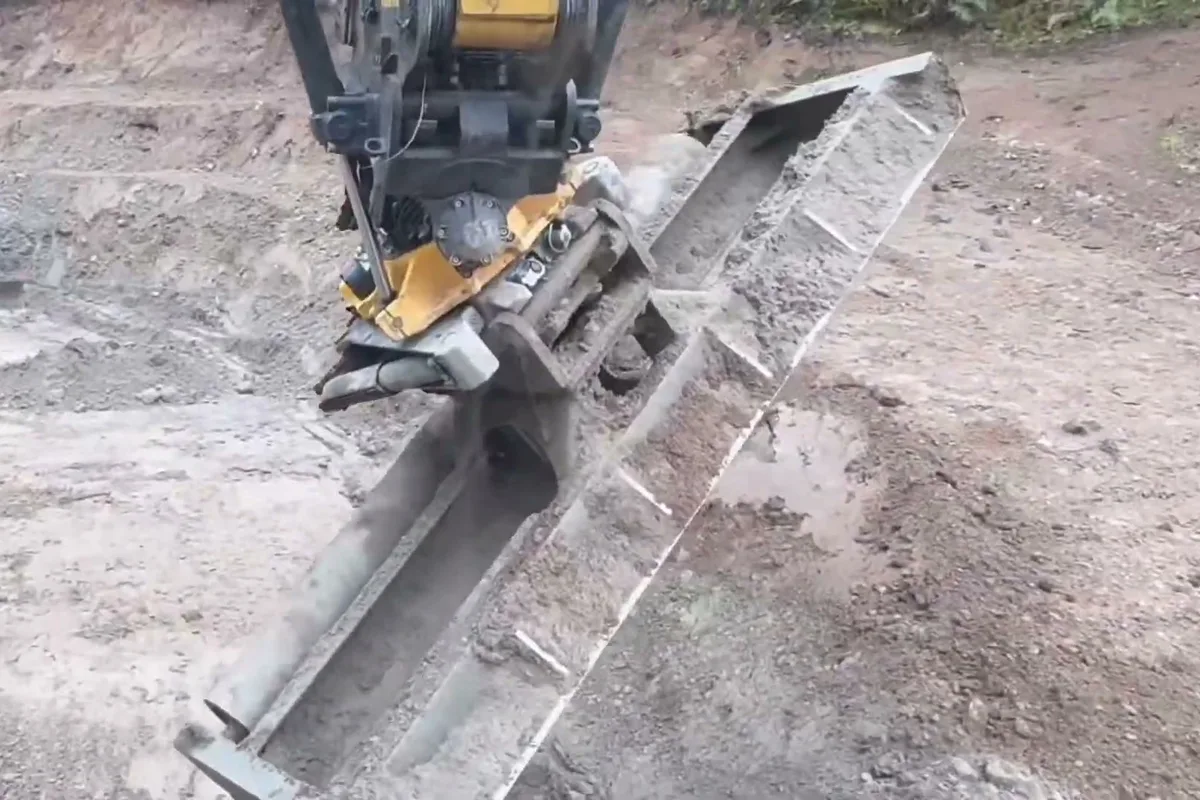
Our excavators, fitted with tilt rotators, dig close along the walls. New perforated pipe goes in on clean washed rock and fabric, and a solid pipe runs to the outlet. While the walls are open, the house can get any waterproofing or insulation it needs. Washington's septic rule keeps footing drains at least 30 feet from a drainfield when the drain lies downslope. Upslope, the gap is at least 10 feet. We call 811 before digging. By law, you locate the private lines you own.
Free, no-obligation estimates across Whidbey Island & Island County.
(360) 544-9109From the first walkthrough to the final one, here’s exactly how your project runs.
We come out and look at the actual ground: the growth, the slope, the wet spots and the access. We listen to what you want done and give you a clear, written estimate. No pressure, and no guessing at a price over the phone.
We lock in a date, plan equipment access and where the debris goes, and account for drainage, buried utilities, and anything on the property that has to be protected. You know the plan before a machine moves.
Our own crew runs our own machines, and the job is supervised on site. We keep the ground under control, keep you posted, and read what we find as we dig instead of forcing the plan through it.
We walk the finished property with you, deal with the debris the way the plan called for, and leave the ground clean, graded, and draining, ready for whatever you are building next.
Common questions about footing drains across Whidbey Island & Island County. Don't see yours? Give us a call — we're happy to help.
French drains, footing drains, infiltration systems, culverts, and swales, engineered to move water off your property and away from your foundation.
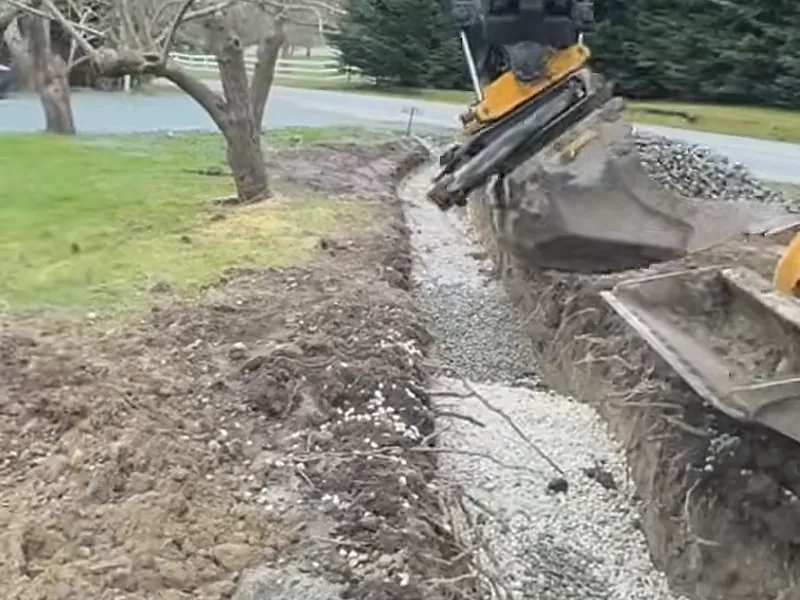
Curtain drains catch groundwater uphill of a house, and French drains collect water in a soggy lawn. Our excavators dig both on Whidbey Island and Camano Island properties.
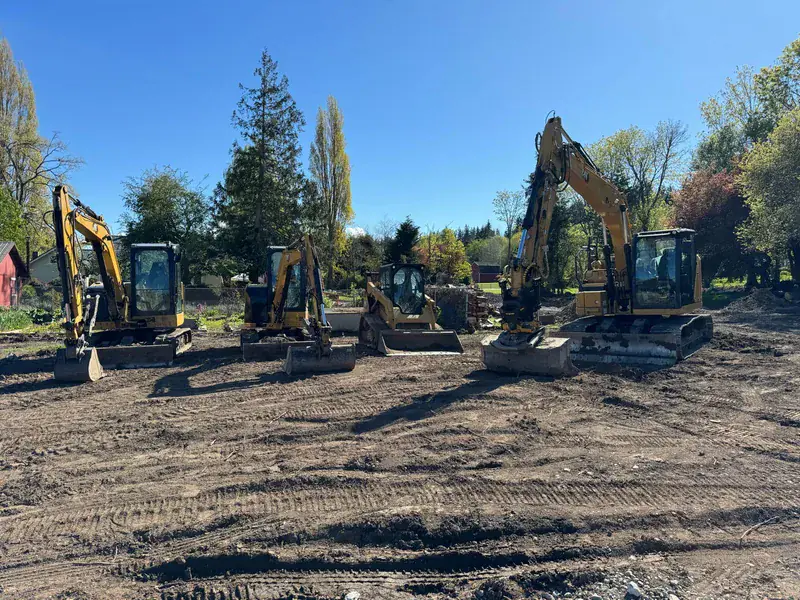
Complete site development: excavation, foundation digs, utilities, access, and prep, handled start to finish by our crew.
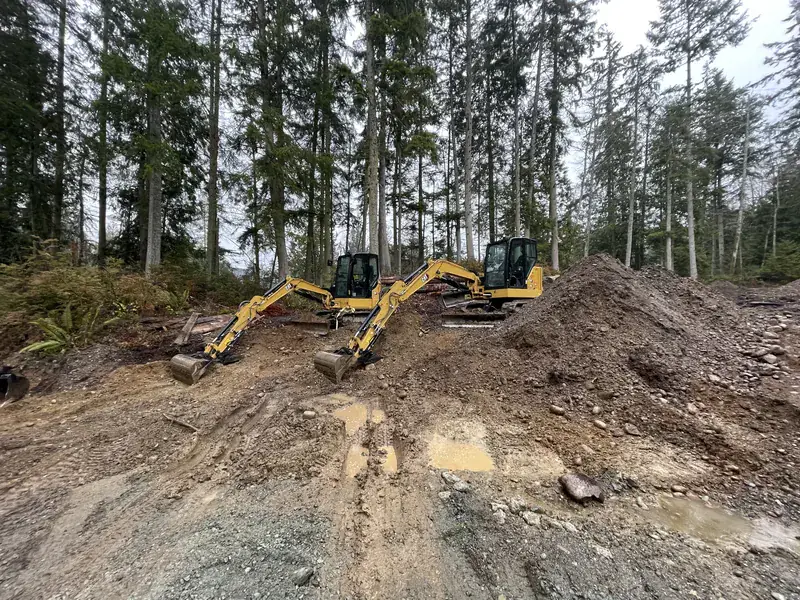
Cut, fill, shape, and finish grade: building pads, yards, and lots left level, compacted, and draining away from what matters.

Precise trenching and installation for water, sewer, power, and gas: bedded, backfilled, and compacted so nothing settles later.
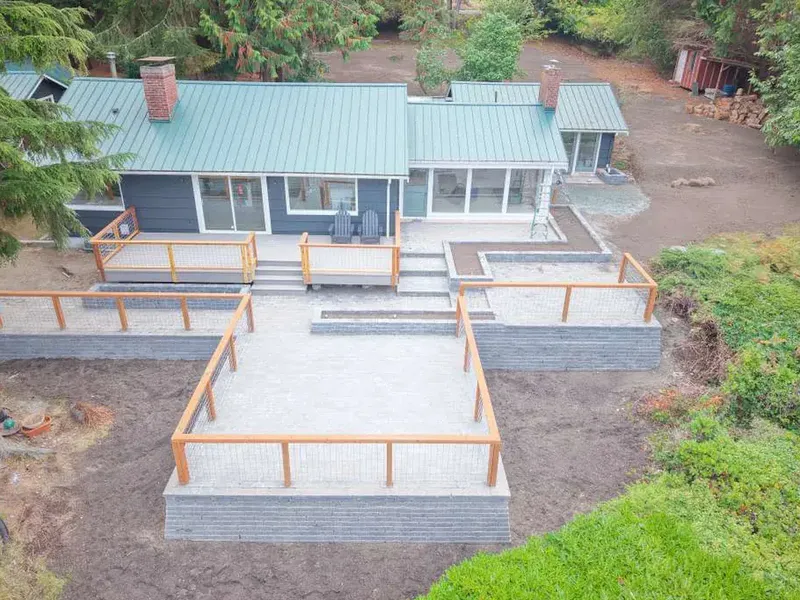
Rockeries, boulder walls, block retaining walls and poured concrete walls, built on a compacted base with drain rock and pipe behind them so the slope stays put.
Three decades clearing, grading, and digging on Whidbey. Under the topsoil here sit glacial till, hardpan, rock and water that stays where it should not, and our work leaves ground that drains and builds right.
A registered Washington general contractor, bonded and fully insured on every job: a real, accountable company, not a rented machine and a handshake. Your property and your liability are covered.
We look at the ground with you and put a plain-English price in writing, with the whole job in it. We tell you what the job really takes, then we show up and do it.
We live and work here. No ferry delays, no out-of-town crews, no subbing the job out and hoping. One company handles the job from the first call to the final grade, and our own machines and operators do the work.
Straight from the landowners, builders, and neighbors we’ve cleared and graded for.
“Jeff was very professional and finished the job in a timely manner. He exceeded our expectations and did a great job on our driveway! Definitely recommend his company.”
“Jeff did an outstanding job grading my lot, which entailed removal of big stumps. Highly recommend.”
“We had a great experience with Culver Construction. Especially enjoyed the workers that Jeff has. They are very knowledgeable about their work and do a great job.”
Need land cleared, a lot graded, a driveway put in, drainage fixed, or a storm mess hauled off? Reach out for a free, no-obligation estimate. We’ll look at the ground with you, give you a written price, and get your job on the schedule.
Tell us about your project — we’ll get right back to you.