Drainage Solutions
French drains, footing drains, infiltration systems, culverts, and swales, engineered to move water off your property and away from your foundation.
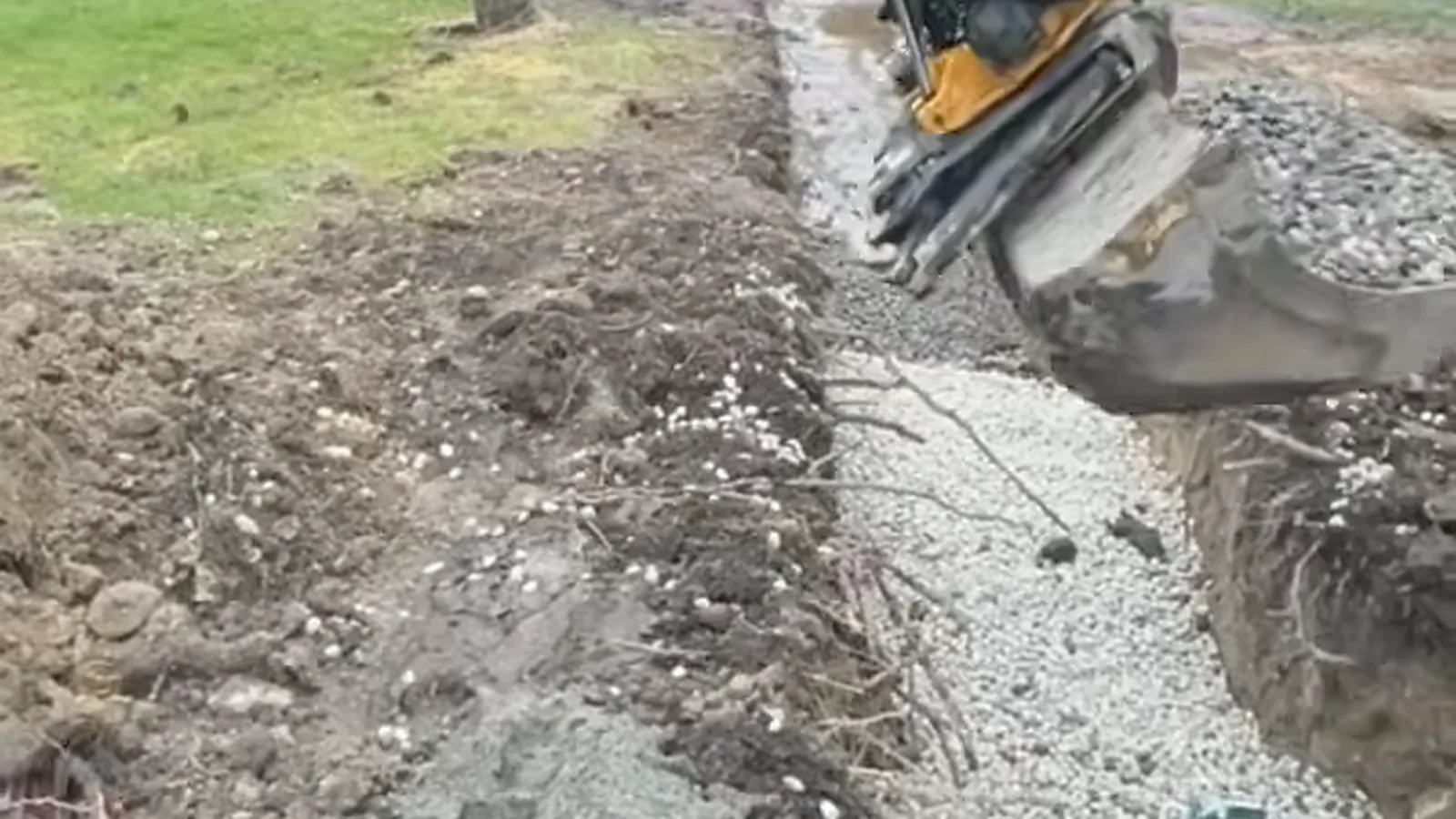
French drains and curtain drains for soggy lawns, wet low spots and crawlspaces across Whidbey Island and Camano Island.
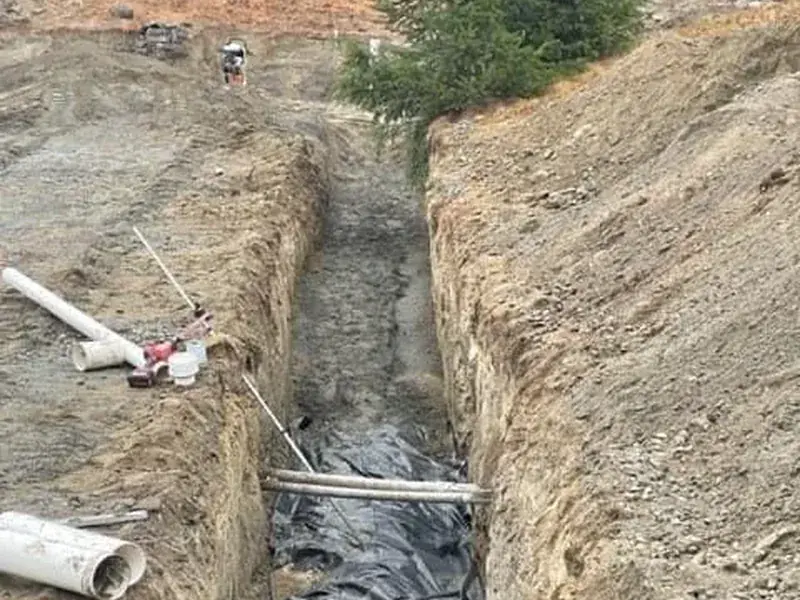
French drain installation on Whidbey Island and Camano Island starts with finding where the water comes from. We dig curtain drains across the slope above a house, a driveway or a yard. They catch the water before it arrives. We put French drains through soggy lawns and wet low spots to collect water that is already there. We also run drains along the uphill side of a wet crawlspace or an outbuilding. We can move or replace an old drain that has silted up.
This page is about the trench drain itself and where its water goes. Catch basins and swales belong with drainage solutions for the whole property. The surface matters too, and that can mean regrading the yard so water runs away from the house. Other pages cover culverts and ditches along a driveway and drainage behind a retaining wall. The same island-based company digs the trench and shapes the ground above it. That way the ground stops feeding the problem.
Tell us about your project — we’ll get right back to you.
Much of Whidbey Island sits on dense glacial till, which locals call hardpan. Rain soaks through the topsoil, perches on the till and travels sideways to the low spot. So the water in a soggy yard often starts uphill. A drain dug only where it pools leaves the source alone, and the water keeps coming. A curtain drain, also called an interceptor drain, catches the water where it travels. One lot can hold clean sand, till, cobble and groundwater, so we read each one on its own.
As French drain contractors working out of Langley, we first find where the water sits and where it starts. A wet stretch between November and March shows it best. We check the county maps with you for critical areas, bluffs and steep slopes. Island County code says grading in a geologically hazardous area needs a geotechnical report and an engineered grading plan. We ask where your septic drainfield sits. Washington law leaves the private lines you own for you to locate, so we ask about those too. Before the dig, we call 811.
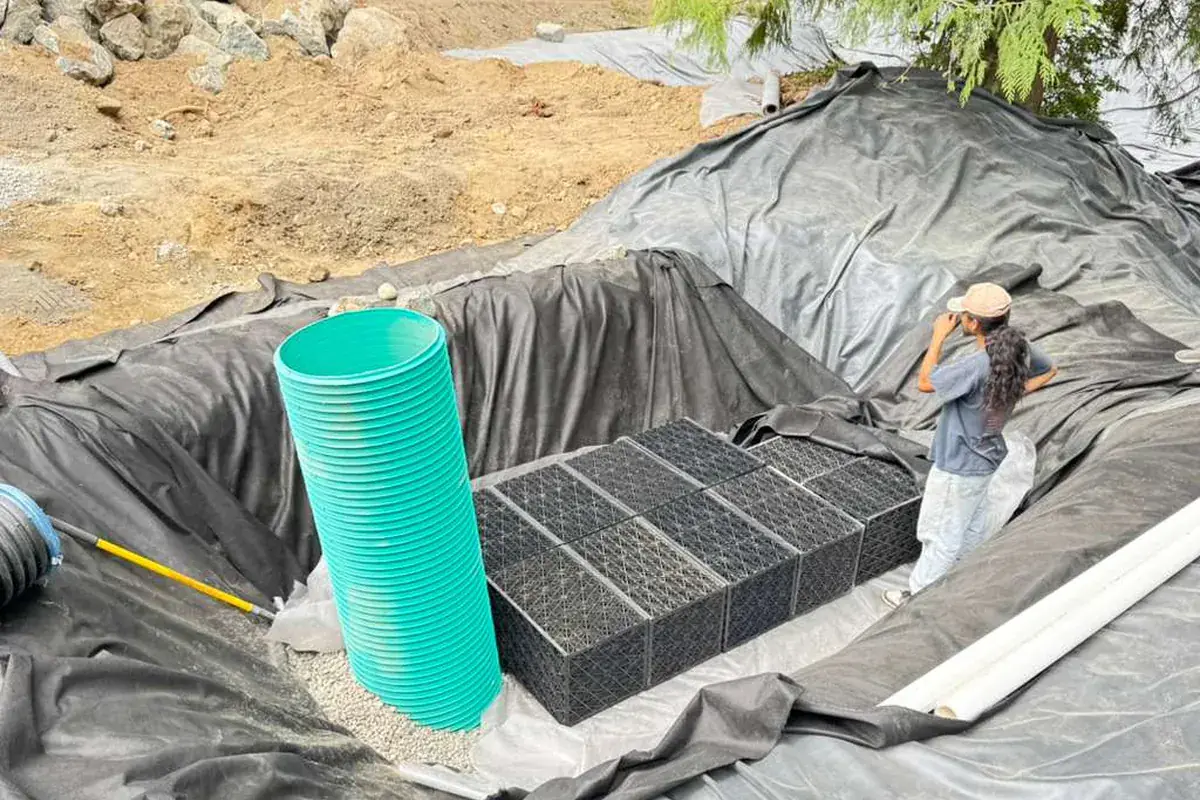
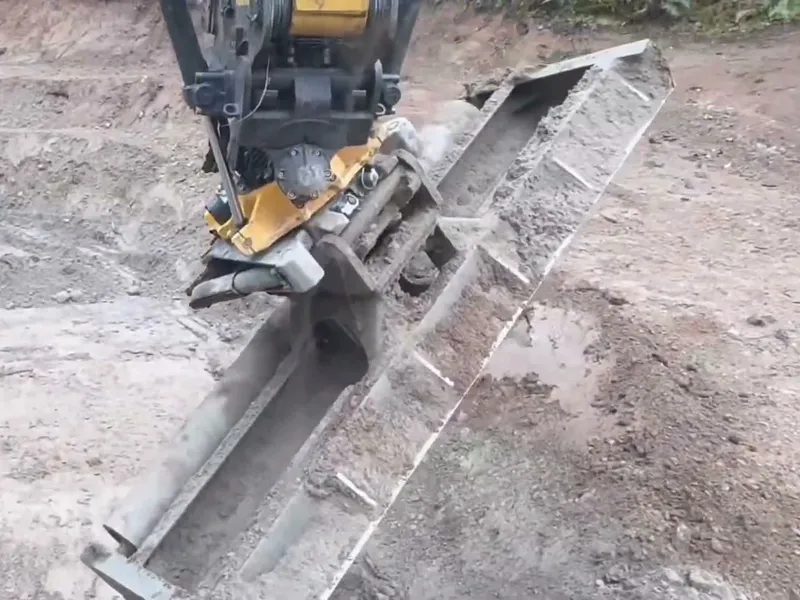
Our excavators, fitted with tilt rotators, cut a narrow trench. A curtain drain trench runs across the slope, and a French drain trench runs through the wet spot. The tilt rotator shapes the trench bottom to a steady fall, so the water moves the right way. We line the trench with filter fabric, which keeps washed-in soil from clogging the gravel. Next comes a bed of washed drain rock, then the perforated pipe, typically 4 inches across.
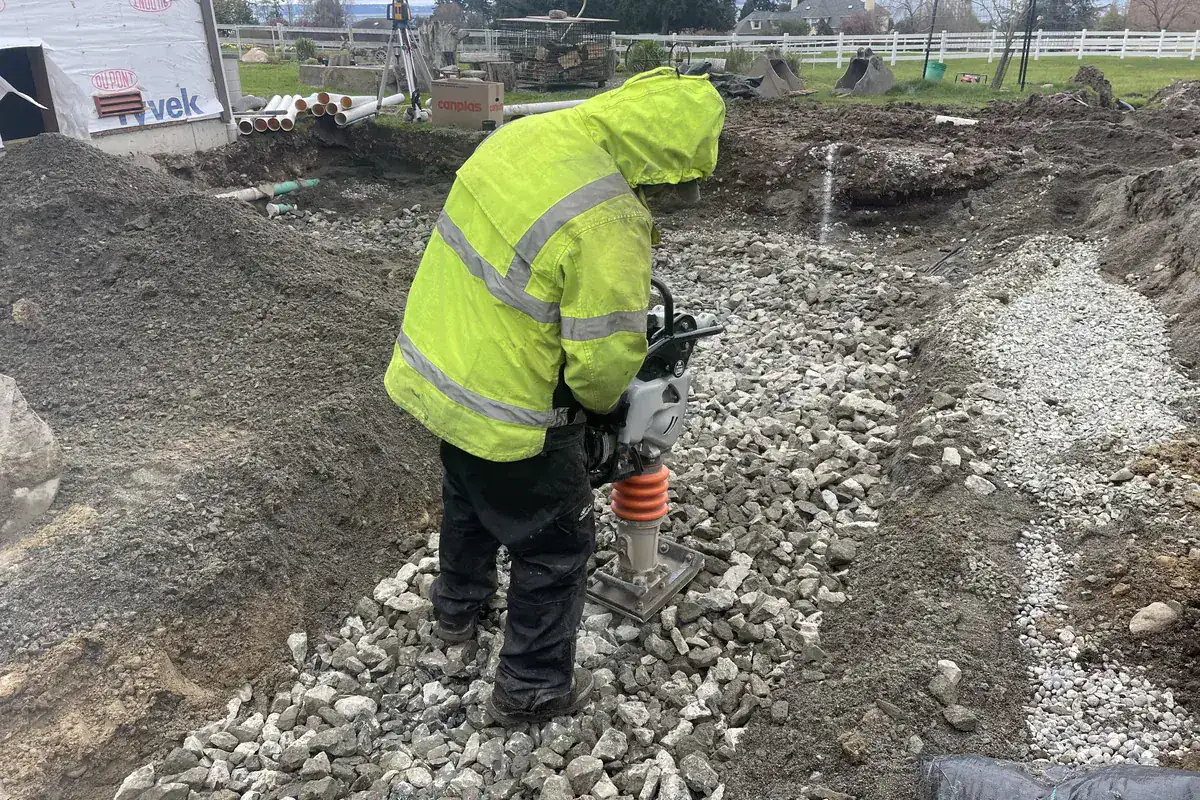
More washed rock covers the pipe, and the fabric folds over it. We finish the top with rock or with topsoil and grass. The pipe runs to an outlet that can take the water. Where the ground allows, it daylights on a lower part of the property. Where the soil takes water, it can end in a drywell or an infiltration trench. Every outlet stays back from a bluff edge and off the land next door. If the house is not built yet, the drain can go in during site development on a new lot.
Washington's underground injection control (UIC) rule names French drains used to manage stormwater as Class V wells. A drywell counts too, and so does a trench with perforated pipe that drains stormwater into the ground. The owner or operator registers a well like that with the Department of Ecology. At a single-family home, a well that takes only roof runoff, or that controls basement flooding, does not have to register. A drain built to carry water to a surface water body is not a UIC well, nor is a trench with no perforated pipe. For anything in between, ask Ecology.
The residential code Washington adopts wants the ground to fall away from a house. It should drop at least 6 inches within the first 10 feet from the foundation. Where walls, lot lines or slopes prevent that, drains or swales carry the water away. A French drain or a curtain drain is one way to do that. The same code requires footing drains around a new foundation that holds back earth. That applies when the walls enclose living or usable space below grade.
Free, no-obligation estimates across Whidbey Island & Island County.
(360) 544-9109From the first walkthrough to the final one, here’s exactly how your project runs.
We come out and look at the actual ground: the growth, the slope, the wet spots and the access. We listen to what you want done and give you a clear, written estimate. No pressure, and no guessing at a price over the phone.
We lock in a date, plan equipment access and where the debris goes, and account for drainage, buried utilities, and anything on the property that has to be protected. You know the plan before a machine moves.
Our own crew runs our own machines, and the job is supervised on site. We keep the ground under control, keep you posted, and read what we find as we dig instead of forcing the plan through it.
We walk the finished property with you, deal with the debris the way the plan called for, and leave the ground clean, graded, and draining, ready for whatever you are building next.
Common questions about french drains across Whidbey Island & Island County. Don't see yours? Give us a call — we're happy to help.
French drains, footing drains, infiltration systems, culverts, and swales, engineered to move water off your property and away from your foundation.
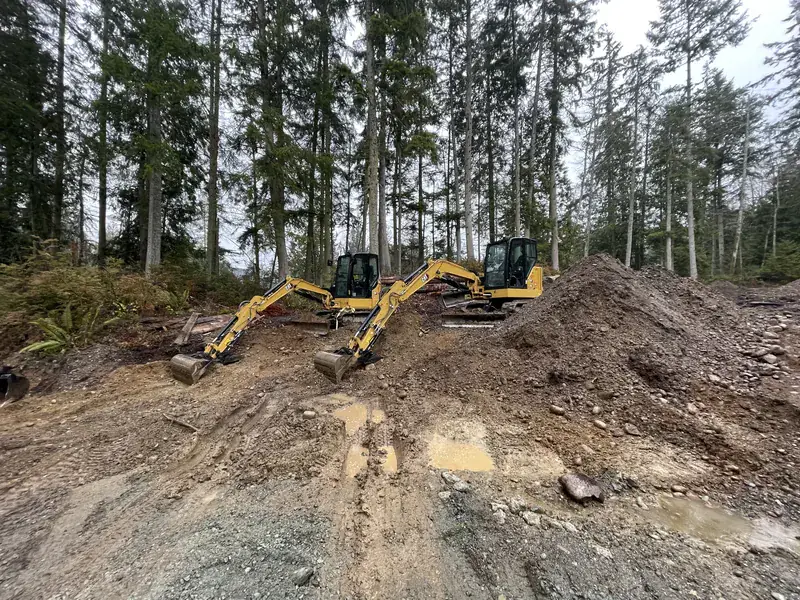
Cut, fill, shape, and finish grade: building pads, yards, and lots left level, compacted, and draining away from what matters.
Footings, stem walls, crawlspace foundations, slabs and flatwork. Formed and poured by the same crew that dug the hole and compacted the pad underneath.
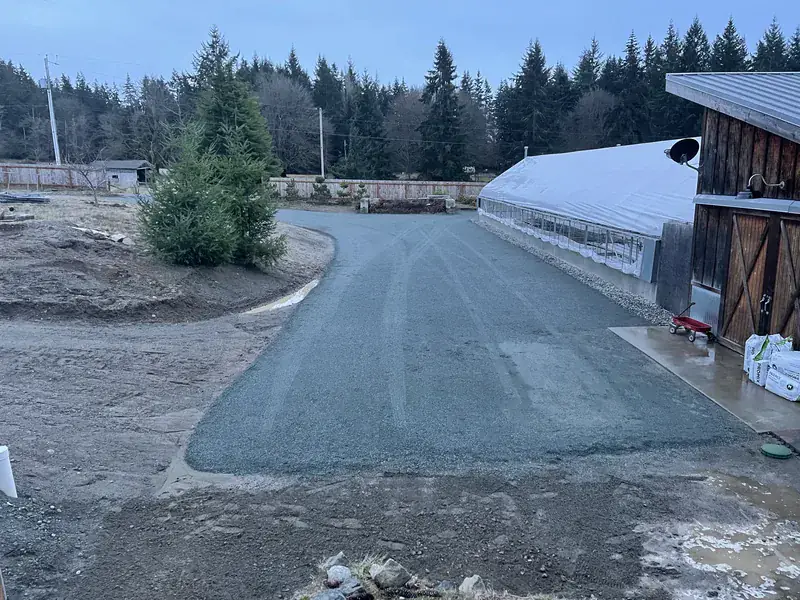
New gravel driveways, long private roads, turnarounds, culverts, and rebuilds of drives that wash out or turn to mud.
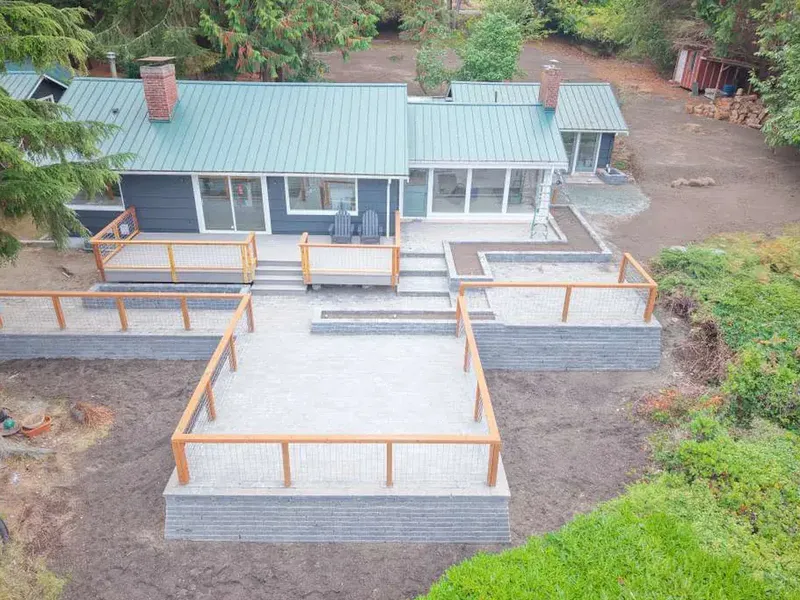
Rockeries, boulder walls, block retaining walls and poured concrete walls, built on a compacted base with drain rock and pipe behind them so the slope stays put.
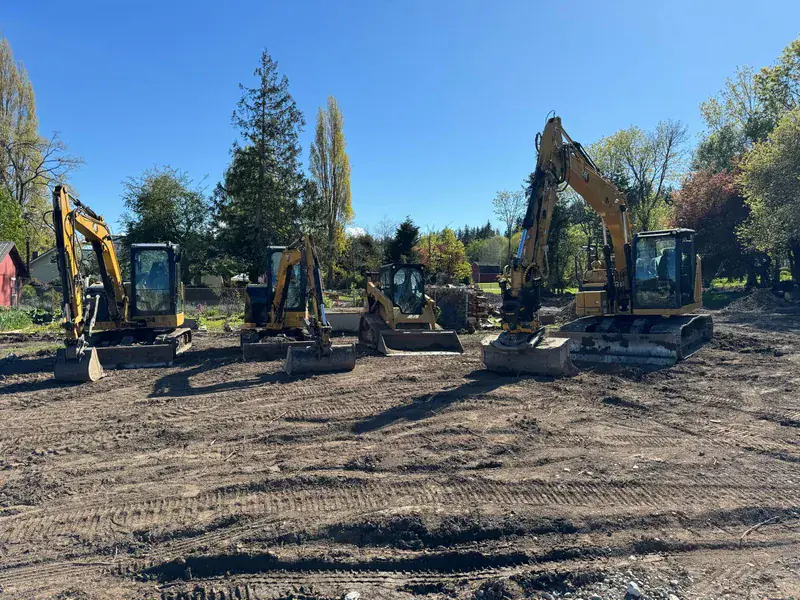
Complete site development: excavation, foundation digs, utilities, access, and prep, handled start to finish by our crew.
Three decades clearing, grading, and digging on Whidbey. Under the topsoil here sit glacial till, hardpan, rock and water that stays where it should not, and our work leaves ground that drains and builds right.
A registered Washington general contractor, bonded and fully insured on every job: a real, accountable company, not a rented machine and a handshake. Your property and your liability are covered.
We look at the ground with you and put a plain-English price in writing, with the whole job in it. We tell you what the job really takes, then we show up and do it.
We live and work here. No ferry delays, no out-of-town crews, no subbing the job out and hoping. One company handles the job from the first call to the final grade, and our own machines and operators do the work.
Straight from the landowners, builders, and neighbors we’ve cleared and graded for.
“Jeff was very professional and finished the job in a timely manner. He exceeded our expectations and did a great job on our driveway! Definitely recommend his company.”
“Jeff did an outstanding job grading my lot, which entailed removal of big stumps. Highly recommend.”
“We had a great experience with Culver Construction. Especially enjoyed the workers that Jeff has. They are very knowledgeable about their work and do a great job.”
Need land cleared, a lot graded, a driveway put in, drainage fixed, or a storm mess hauled off? Reach out for a free, no-obligation estimate. We’ll look at the ground with you, give you a written price, and get your job on the schedule.
Tell us about your project — we’ll get right back to you.