Retaining Walls
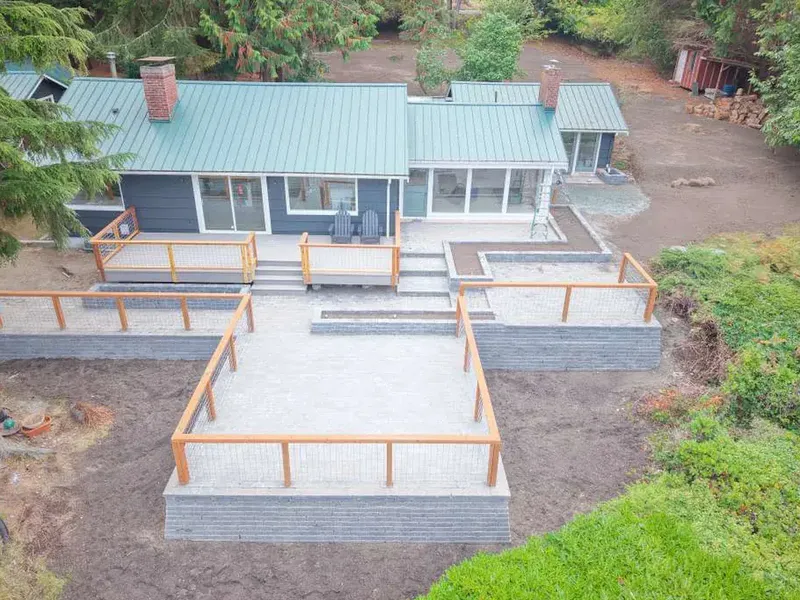
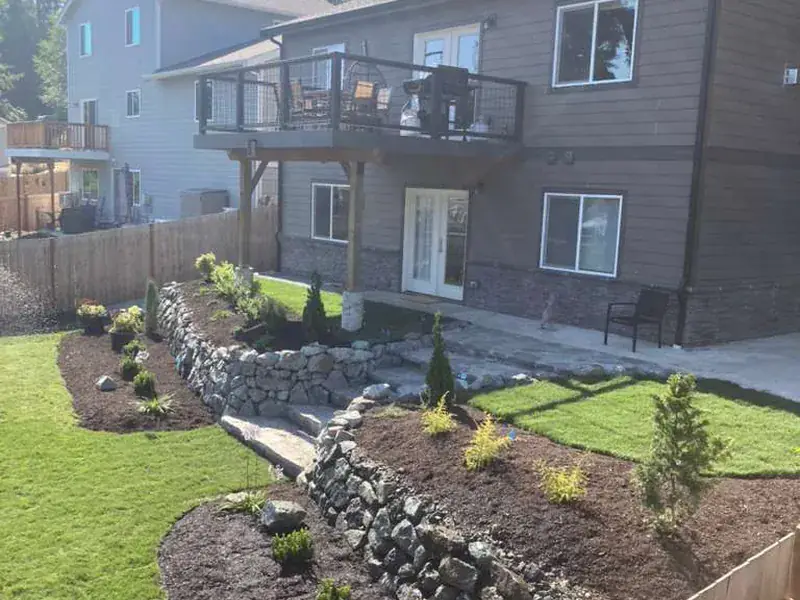
Rockeries, boulder walls, block retaining walls and poured concrete walls, built on a compacted base with drain rock and pipe behind them so the slope stays put.
Retaining wall repair and replacement across Whidbey Island, for rock, block, timber and concrete walls that have moved.
We do retaining wall repair on Whidbey Island, Camano Island and north into Skagit County. That covers a leaning retaining wall, a bulging block wall, a rotted timber wall or a rockery coming apart. We look at the wall and the slope above it with you, then put the price in writing. A moved section comes apart to firm ground and goes back with drainage behind it. When the whole wall has failed, we do a full retaining wall replacement on a new base.
This page covers walls that are already failing. For a fresh cut or a new terrace, see our page on building a new retaining wall. When an old wall is past saving, the work starts with tearing out a failed wall. A rotted timber or tie wall comes out this way, and rock or block replaces it on the same job. The same company does the dirt work and builds the wall that sits on it.
Tell us about your project — we’ll get right back to you.
Federal Highway Administration guidelines include a checklist for judging an existing rockery. Much of it is visible from the yard. Each rock should lean back into the slope, so a rock tilted out of the face is a warning. Each rock should also rest on at least two rocks below it. A vertical seam up the face, or a column of rocks stacked one on another, fails the check. So does a loose cap rock, or any rock you can move by hand.
Gaps in the face matter too. The checklist calls for every void over 6 inches to be filled with chinking rock. Soil washing out through the gaps is a bad sign. That lost soil lets the ground behind the wall settle. On a block wall, look for a face that leans forward or bellies out. On a timber wall, look for rot. Seepage is what washes soil out through a wall. That makes drainage above and behind the wall part of every repair.
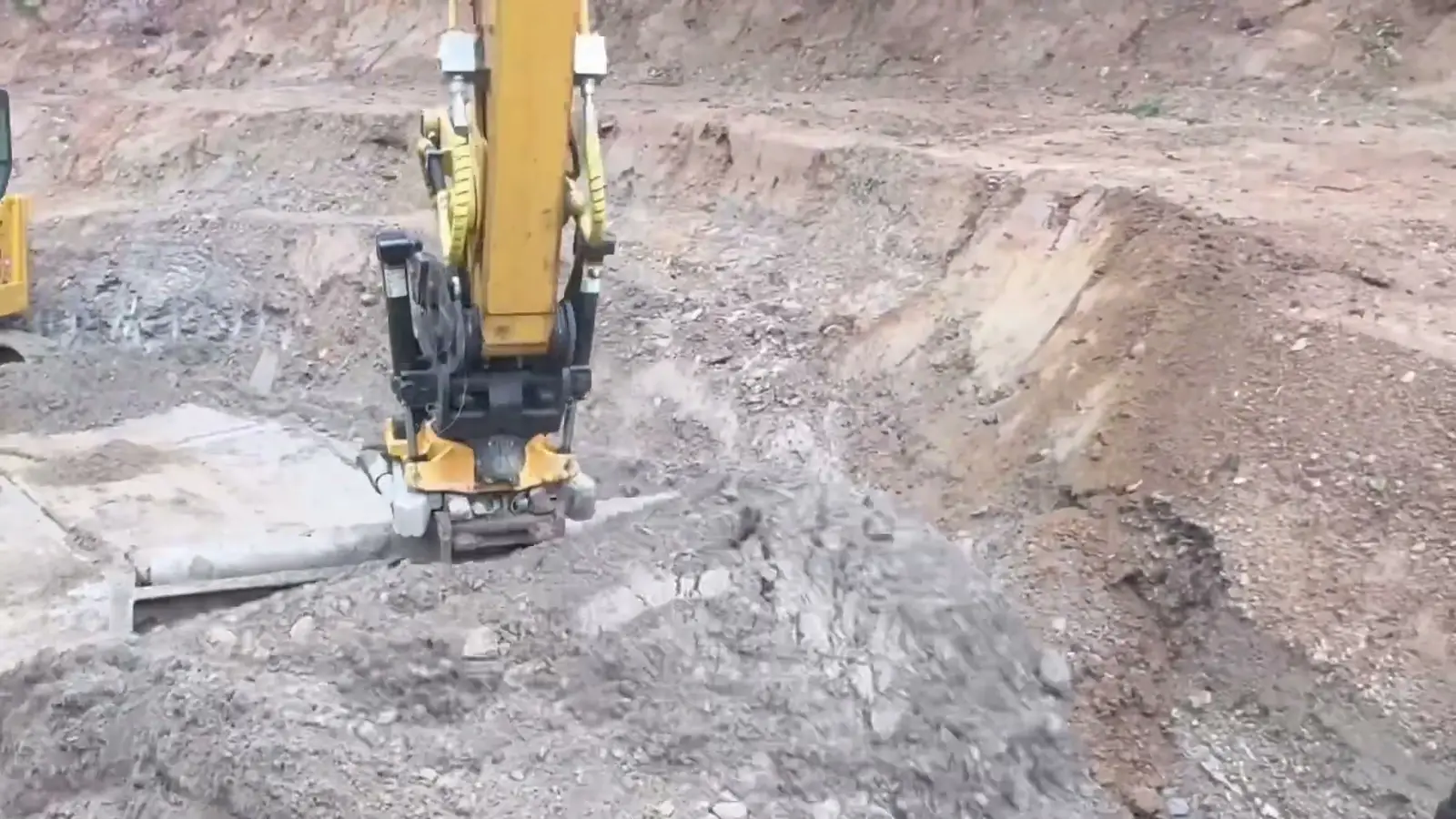
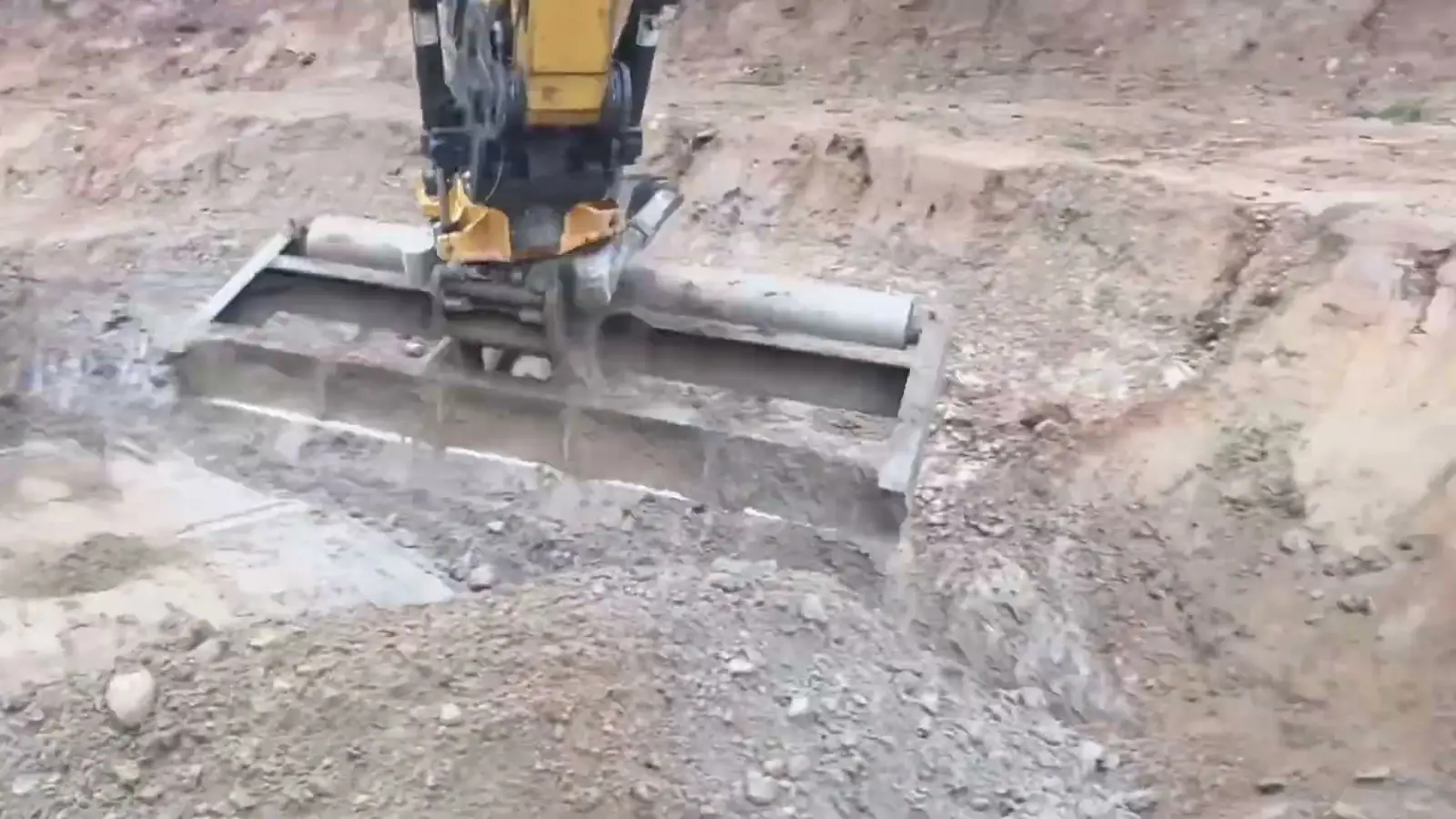
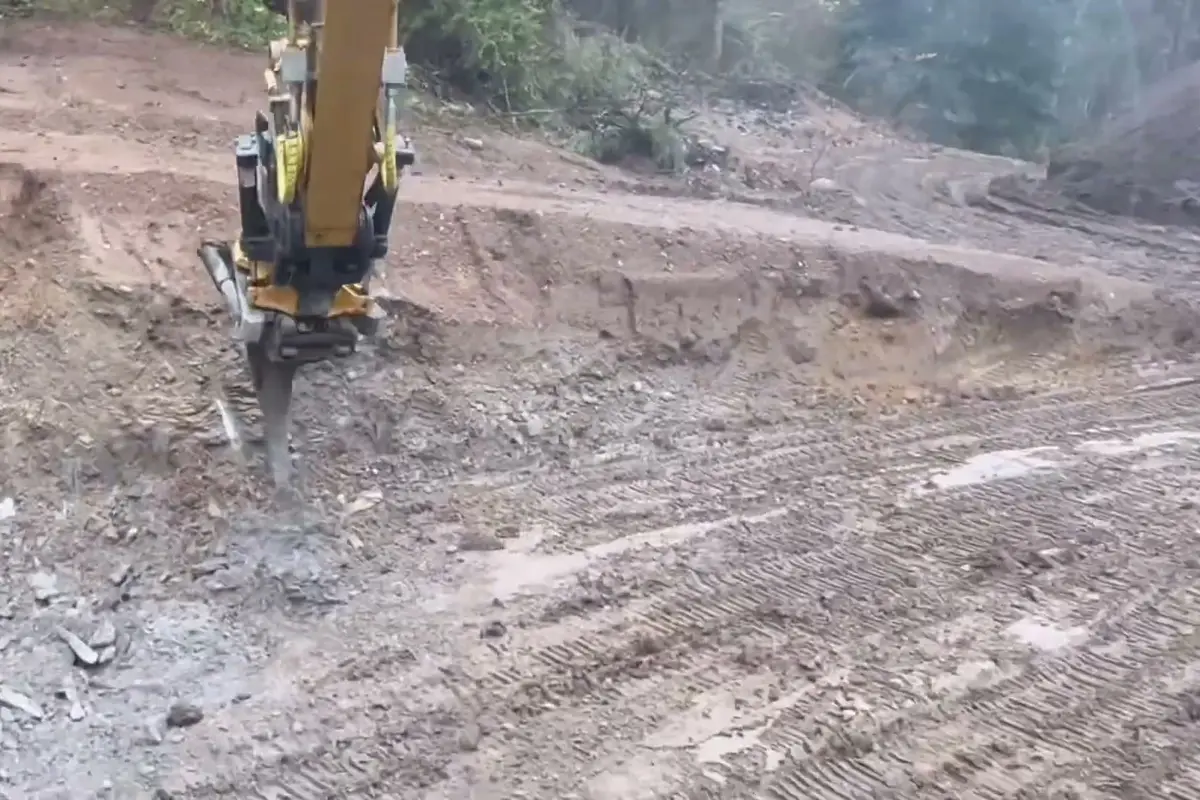
Repair starts at the base, and an old rockery's buried base is often the hardest part to judge. Taking a section apart is the direct way to see it. Our excavator's sorting grapple pulls the rock and sets it aside. Then comes cutting a new bench into firm ground. Base rocks go back in full contact with the soil, largest at the bottom. The tilt rotator turns each boulder until it sits on at least two rocks below and leans into the slope. Chinking rock fills any gap over 6 inches.
Behind the rebuilt rock, filter fabric lines the cut. Crushed rock, often called quarry spalls, fills the gap. A 4-inch perforated pipe at the bottom carries water to an outlet. A bellied block wall comes down to sound ground and goes back on a new base. At least 12 inches of gravel and a drain pipe go behind the blocks. We also send surface water away above the wall, as block industry guidance advises. Our guide covers what goes behind each kind of wall.
In unincorporated Island County, a rebuilt retaining wall up to 4 feet needs no building permit. The 4 feet runs from the bottom of the footing to the top of the wall. Taller walls need a permit, and so does a wall holding up a slope, a driveway or a building. The residential code, IRC R404.4, covers retaining walls not braced at the top. One that holds back more than 48 inches of unbalanced fill must be designed. That design checks overturning, sliding, foundation pressure and water uplift. Washington adopts that section as written.
Any amount of digging within 200 feet of a regulated shoreline needs a county grading permit. So does digging on a steep slope, 40 percent or steeper over at least 10 feet of rise. Grading in a geologically hazardous area also needs a geotechnical engineering report. Bulkheads and seawalls are marine contractors' work. We check the county maps with you. You apply, or someone you name in writing does, and we build to the permit's conditions. The free 811 locates go in at least two full business days before we dig.
Free, no-obligation estimates across Whidbey Island & Island County.
(360) 544-9109From the first walkthrough to the final one, here’s exactly how your project runs.
We come out and look at the actual ground: the growth, the slope, the wet spots and the access. We listen to what you want done and give you a clear, written estimate. No pressure, and no guessing at a price over the phone.
We lock in a date, plan equipment access and where the debris goes, and account for drainage, buried utilities, and anything on the property that has to be protected. You know the plan before a machine moves.
Our own crew runs our own machines, and the job is supervised on site. We keep the ground under control, keep you posted, and read what we find as we dig instead of forcing the plan through it.
We walk the finished property with you, deal with the debris the way the plan called for, and leave the ground clean, graded, and draining, ready for whatever you are building next.
Common questions about retaining wall repair across Whidbey Island & Island County. Don't see yours? Give us a call — we're happy to help.
Rockeries, boulder walls, block retaining walls and poured concrete walls, built on a compacted base with drain rock and pipe behind them so the slope stays put.
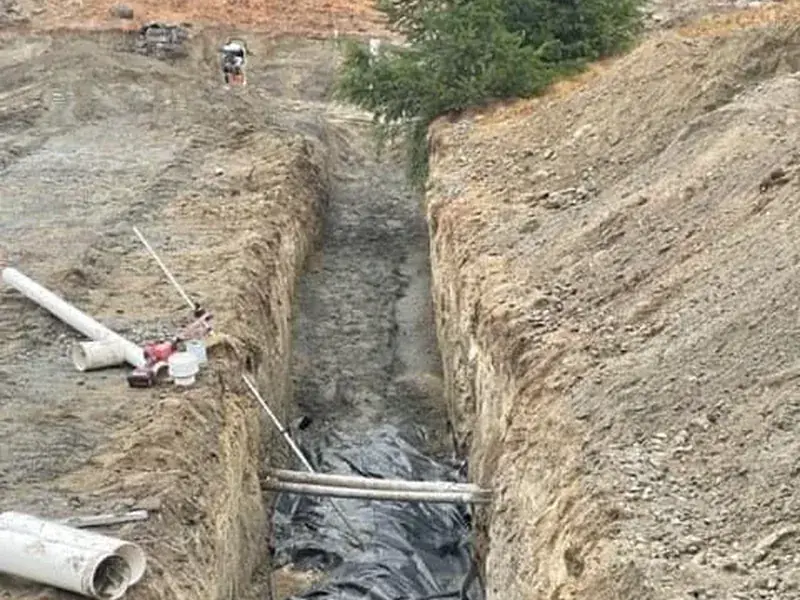
French drains, footing drains, infiltration systems, culverts, and swales, engineered to move water off your property and away from your foundation.

Structures, outbuildings, foundations, slabs, and fire damage taken down safely and hauled off, leaving a clean site.
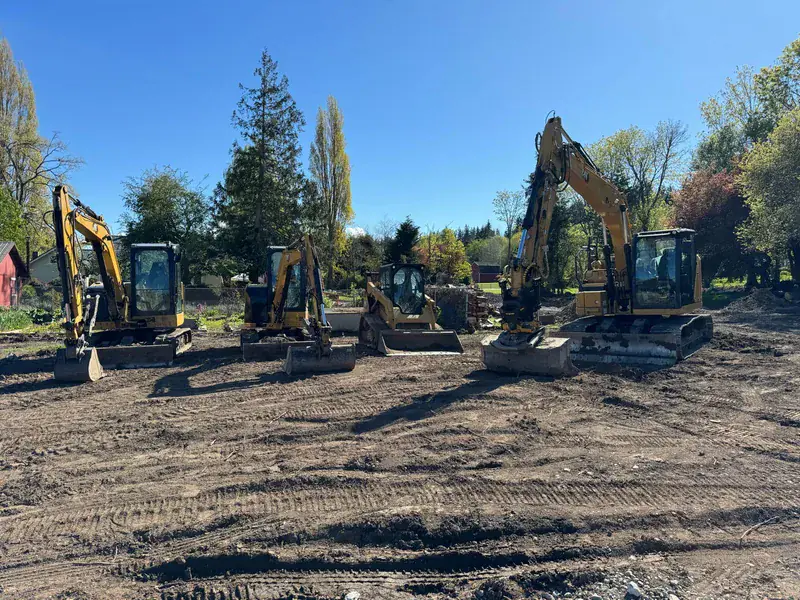
Complete site development: excavation, foundation digs, utilities, access, and prep, handled start to finish by our crew.
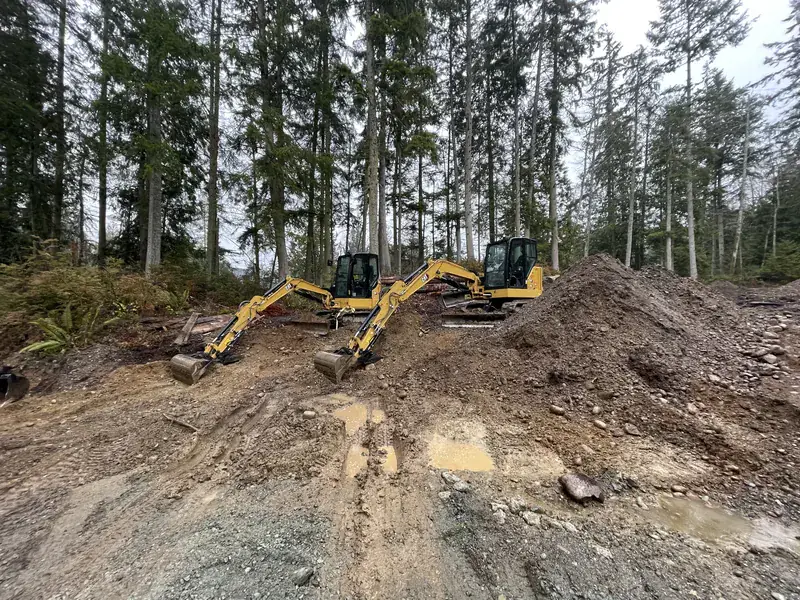
Cut, fill, shape, and finish grade: building pads, yards, and lots left level, compacted, and draining away from what matters.
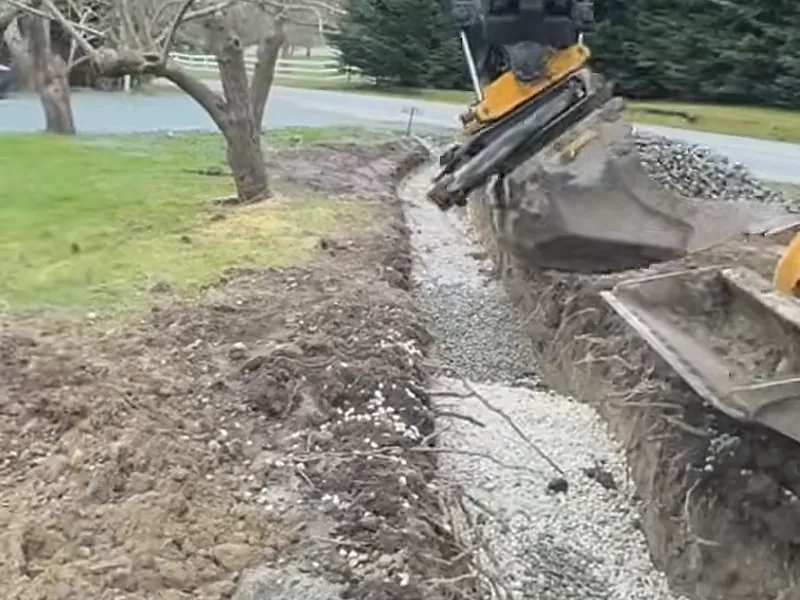
Curtain drains catch groundwater uphill of a house, and French drains collect water in a soggy lawn. Our excavators dig both on Whidbey Island and Camano Island properties.
Three decades clearing, grading, and digging on Whidbey. Under the topsoil here sit glacial till, hardpan, rock and water that stays where it should not, and our work leaves ground that drains and builds right.
A registered Washington general contractor, bonded and fully insured on every job: a real, accountable company, not a rented machine and a handshake. Your property and your liability are covered.
We look at the ground with you and put a plain-English price in writing, with the whole job in it. We tell you what the job really takes, then we show up and do it.
We live and work here. No ferry delays, no out-of-town crews, no subbing the job out and hoping. One company handles the job from the first call to the final grade, and our own machines and operators do the work.
Straight from the landowners, builders, and neighbors we’ve cleared and graded for.
“Jeff was very professional and finished the job in a timely manner. He exceeded our expectations and did a great job on our driveway! Definitely recommend his company.”
“Jeff did an outstanding job grading my lot, which entailed removal of big stumps. Highly recommend.”
“We had a great experience with Culver Construction. Especially enjoyed the workers that Jeff has. They are very knowledgeable about their work and do a great job.”
Need land cleared, a lot graded, a driveway put in, drainage fixed, or a storm mess hauled off? Reach out for a free, no-obligation estimate. We’ll look at the ground with you, give you a written price, and get your job on the schedule.
Tell us about your project — we’ll get right back to you.