
Landscape Construction
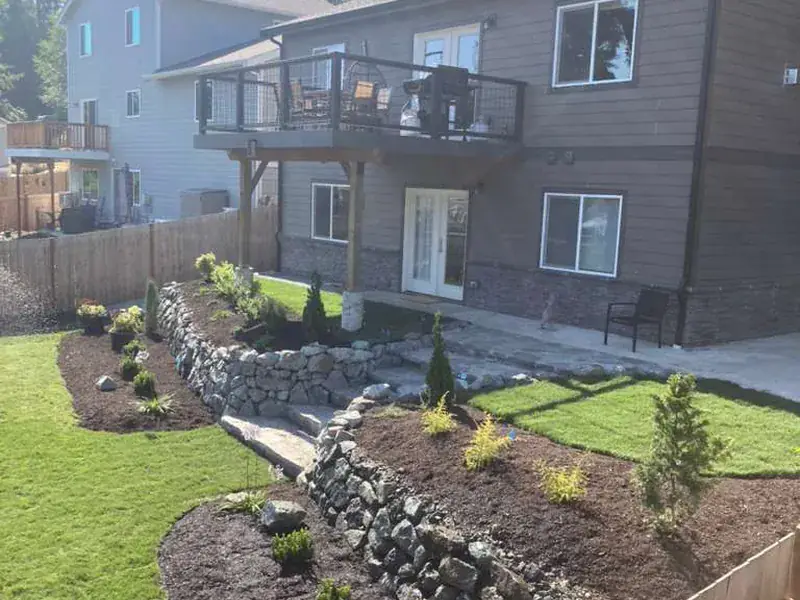
Paver patios, walkways, steps, planting beds, and hardscape, with real excavation, base, and drainage underneath so it does not move.
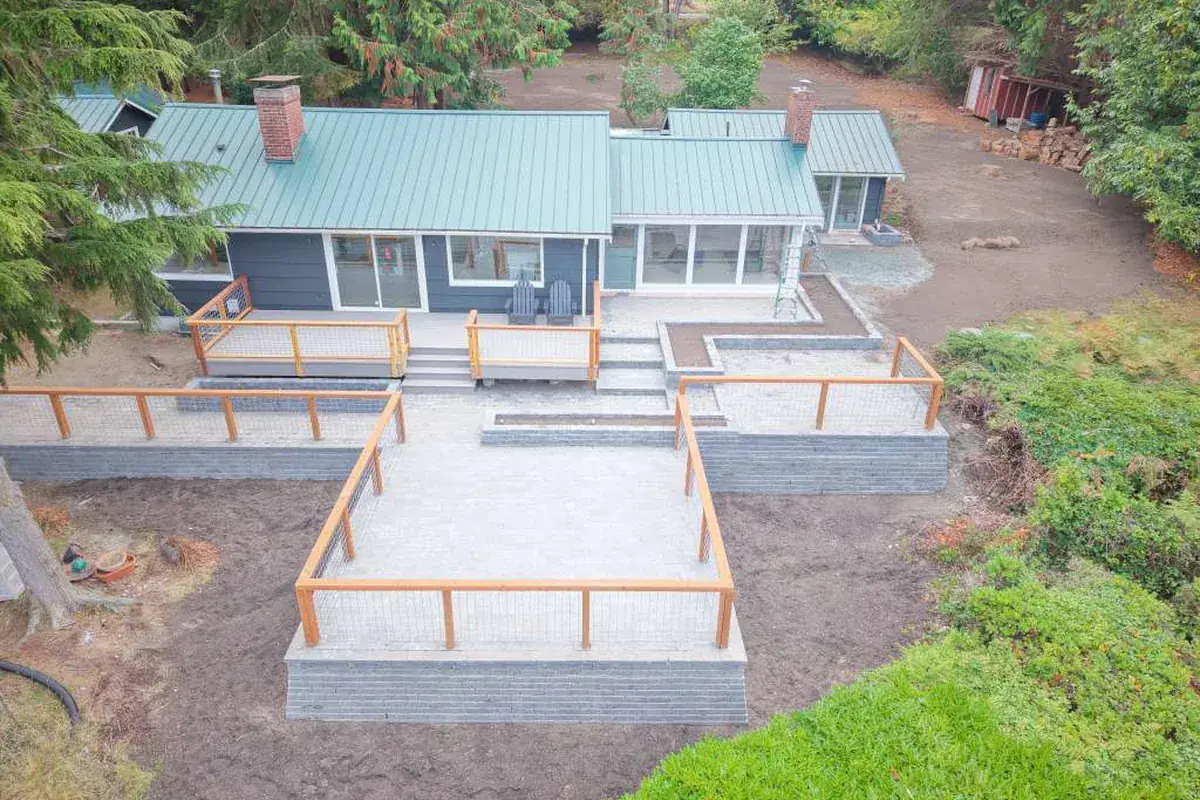
Retaining wall installation across Whidbey Island, Camano Island and Skagit County: rockeries, boulder walls, block walls and the drainage that holds them up.
As a retaining wall contractor on Whidbey Island, we build walls that turn a slope into ground you can use. We work the island end to end, plus Camano Island and north into Skagit County. Rockeries and boulder walls go in with our excavators. We also build segmental block walls and terraces that step a steep yard down in stages. A leaning wood or block wall comes out, and a new one goes in on a proper base.
This page covers walls that hold back a slope. The finish side of the yard, patios, walkways and steps, has its own page. Grading and drainage are separate work that a wall job almost always ties into, and we do both. When a design calls for concrete, poured concrete walls and footings come from the same crew that pours foundations here. On every wall we do the bench cut, the base, the wall and the backfill. One company owns the result.
Tell us about your project — we’ll get right back to you.
Most failed walls on this island failed for the same reason. Water. Under the topsoil much of Whidbey is dense glacial till, and water will not soak through it. It perches on the till and travels sideways downhill until something stops it. A wall with no drain rock and no pipe behind it becomes that something. By February the backfill is saturated and the pressure on the wall goes up. Then it starts to lean, bulge or push out at the bottom.
So we build the wall from the back forward. We cut the bench into firm ground with our excavators, then set a compacted base under the wall. Footings go below the frost line, which Island County puts at 12 inches under finish grade. Drain rock goes behind the block or rock, with perforated pipe at the bottom running to daylight. Backfill goes in one lift at a time and gets compacted. Geogrid goes into those lifts where the design calls for it. Then drainage behind the wall ties into where the rest of the water goes.
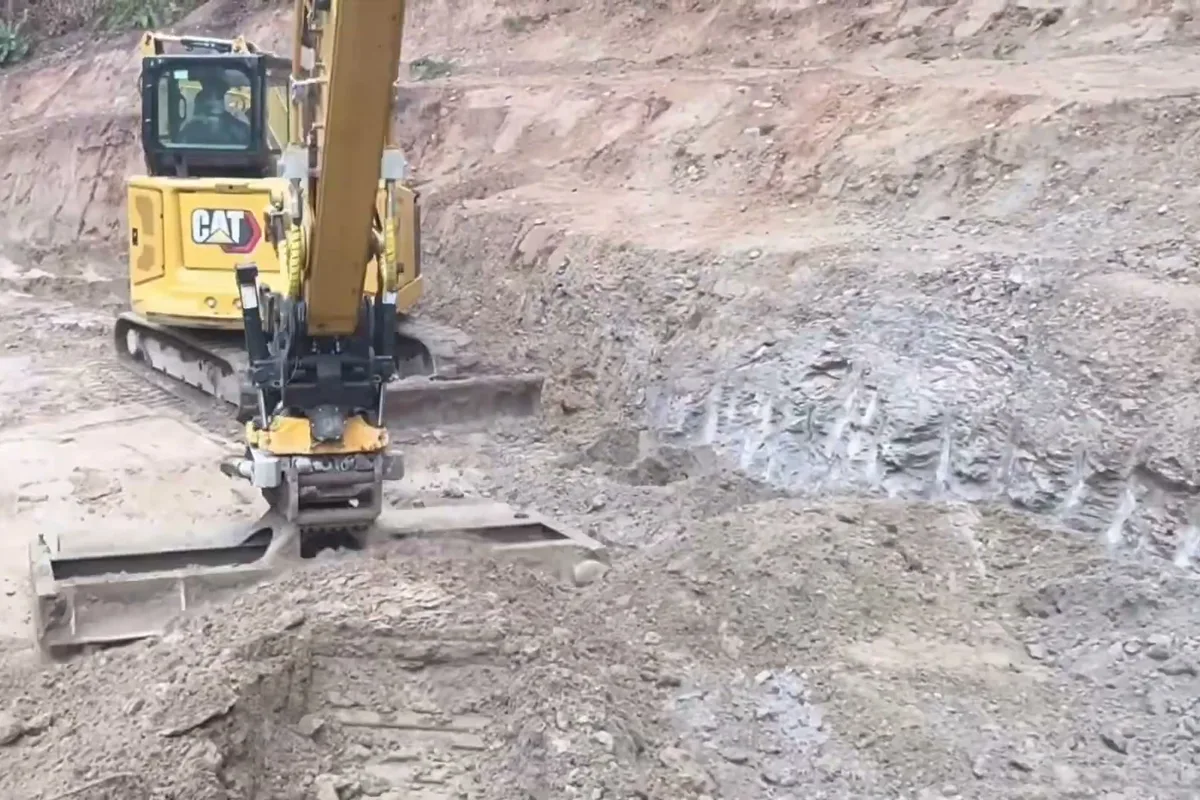
A rockery is a face of large rock laid against a cut that is already stable. It protects the cut from weather and erosion, and it looks like it belongs on this island. Our excavators place the rock. The tilt rotator lets the machine turn and angle each boulder, so it beds into the rock around it. Each course sets back into the hill, which is the batter. The wall gets its strength from weight and from how the rock fits together.
A rockery and a structural wall do different jobs. A rockery faces and protects a cut that would mostly hold on its own. A block or poured concrete wall holds soil that would otherwise move. The company came out of building custom homes on this island. So we look at what has to sit above the wall before we pick the type. On a tall slope we often step the hill into shorter walls with planting space between them. When the ground above needs shaping too, regrading the slope above the wall happens on the same job.
In unincorporated Island County some retaining walls do not need a building permit. The exemption covers a wall that is not over 4 feet with no surcharge on it. That 4 feet gets measured from the bottom of the footing to the top of the wall. So the face you see on an exempt wall is shorter than 4 feet. A surcharge is weight above the wall: a slope, a driveway, a parked vehicle or a building. With a surcharge the wall needs a permit and usually an engineer's design.
Slopes and bluffs carry their own rules here. Island County regulates clearing and excavation in any quantity near a shoreline, on steep slopes and in geologically hazardous areas. Land-disturbing work inside the setback from one of those areas needs a report sealed by a geotechnical engineer. Surface drainage cannot be run across the face of a marine bluff. French drains and infiltration systems are restricted there. Before any dig we call in the free 811 locates. Then we start cutting the bench for a wall.
Free, no-obligation estimates across Whidbey Island & Island County.
(360) 632-5159From the first walkthrough to the final one, here’s exactly how your project runs.
We come out and look at the actual ground — the growth, the slope, the wet spots, the access — listen to what you want done, and give you a straight, written estimate. No pressure, and no guessing at a price over the phone.
We lock in a date, plan equipment access and where the debris goes, and account for drainage, buried utilities, and anything on the property that has to be protected. You know the plan before a machine moves.
Our own crew runs our own machines, and the job is supervised on site. We keep the ground under control, keep you posted, and read what we find as we dig instead of forcing the plan through it.
We walk the finished property with you, deal with the debris the way the plan called for, and leave the ground clean, graded, and draining — ready for whatever you are building next.
Common questions about retaining walls across Whidbey Island & Island County. Don't see yours? Give us a call — we're happy to help.
Paver patios, walkways, steps, planting beds, and hardscape, with real excavation, base, and drainage underneath so it does not move.
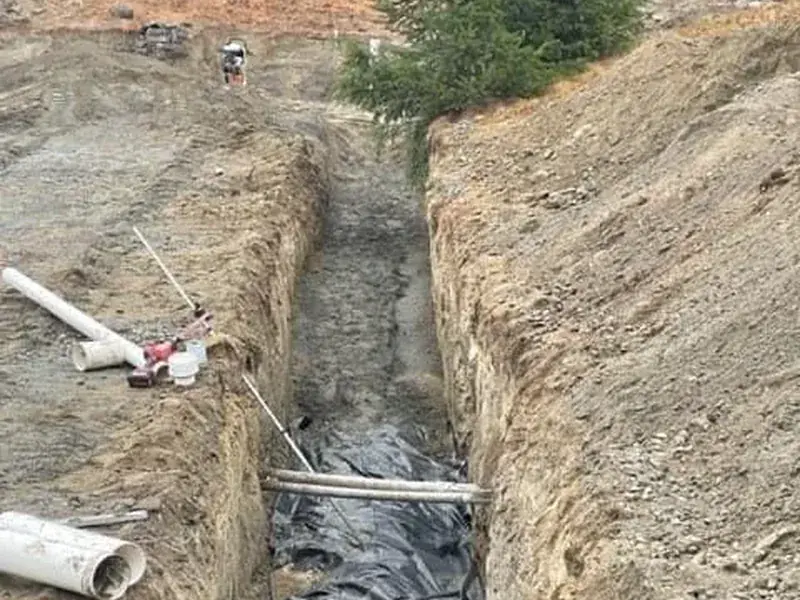
French drains, footing drains, infiltration systems, culverts, and swales — engineered to move water off your property and away from your foundation.
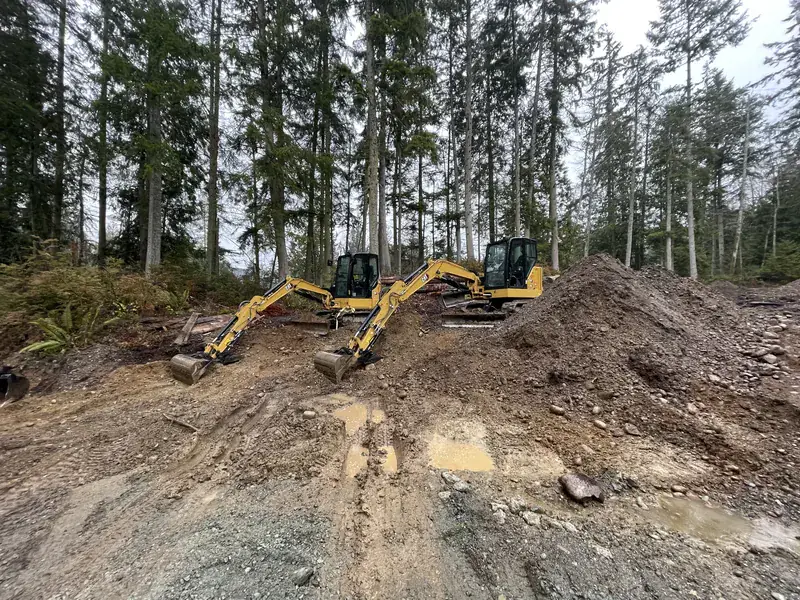
Cut, fill, shape, and finish grade — building pads, yards, and lots left level, compacted, and draining away from what matters.
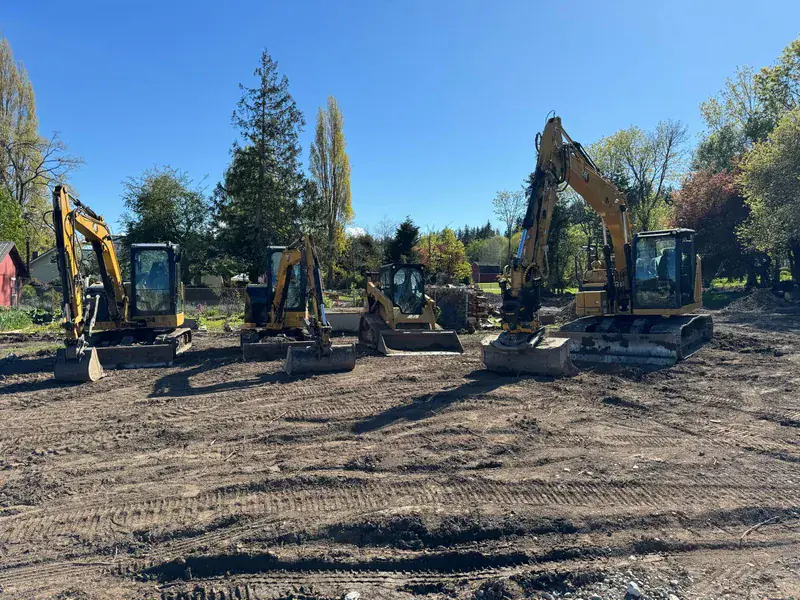
Complete site development — excavation, foundation digs, utilities, access, and prep, handled start to finish by one crew.
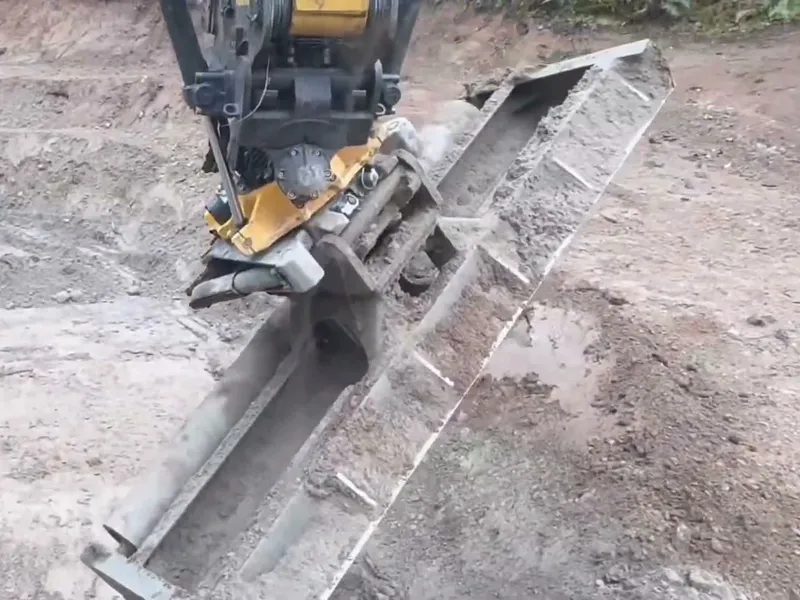
Footings, stem walls, crawlspace foundations, slabs and flatwork. Formed and poured by the same crew that dug the hole and compacted the pad underneath.
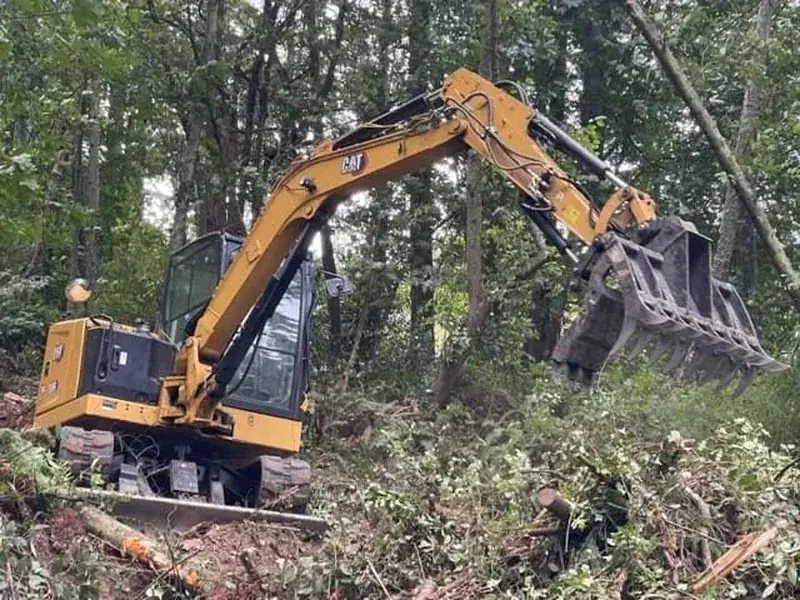
Full lot and acreage clearing: trees, brush, blackberry, stumps, and fence lines taken back to clean, buildable ground.
Three decades clearing, grading, and digging on Whidbey. We know what is under the topsoil here — glacial till, hardpan, rock, water that sits where it should not — and what it takes to leave ground that drains and builds right.
A registered Washington general contractor, bonded and fully insured on every job — a real, accountable company, not a rented machine and a handshake. Your property and your liability are covered.
You get an honest walk-the-property estimate and a plain-English price — no surprise add-ons, no lowball-then-upcharge. We tell you what the job really takes, then we show up and do it.
We live and work here. No ferry delays, no out-of-town crews, no subbing the job out and hoping. One company handles the job from the first call to the final grade, and our own machines and operators do the work.
Need land cleared, a lot graded, a driveway put in, drainage fixed, or a storm mess hauled off? Reach out for a free, no-obligation estimate — we’ll walk the property, give you a straight price, and get your job on the schedule.
Tell us about your project — we’ll get right back to you.