
Retaining Walls
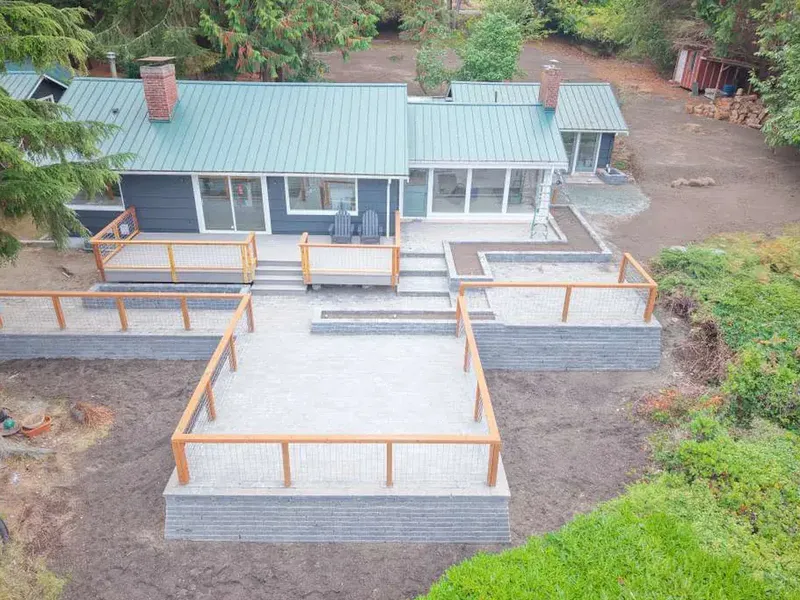
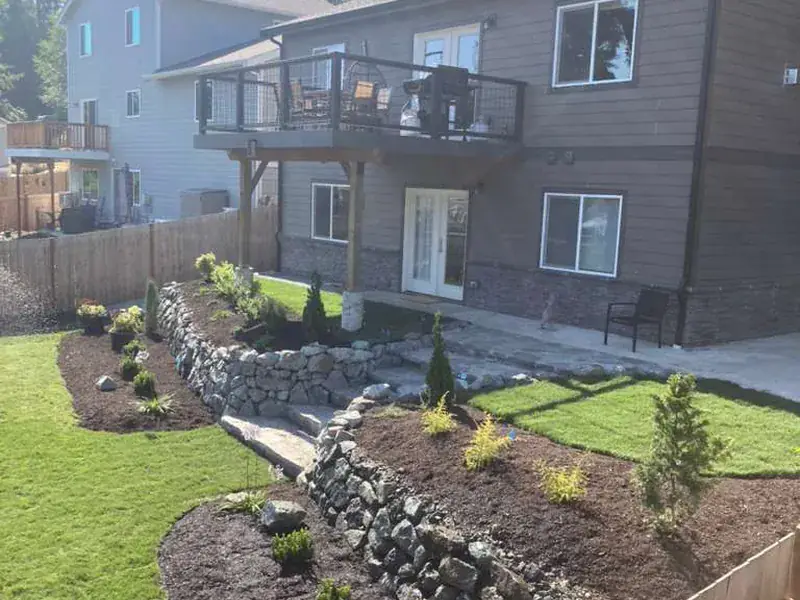
Rockeries, boulder walls, block retaining walls and poured concrete walls, built on a compacted base with drain rock and pipe behind them so the slope stays put.
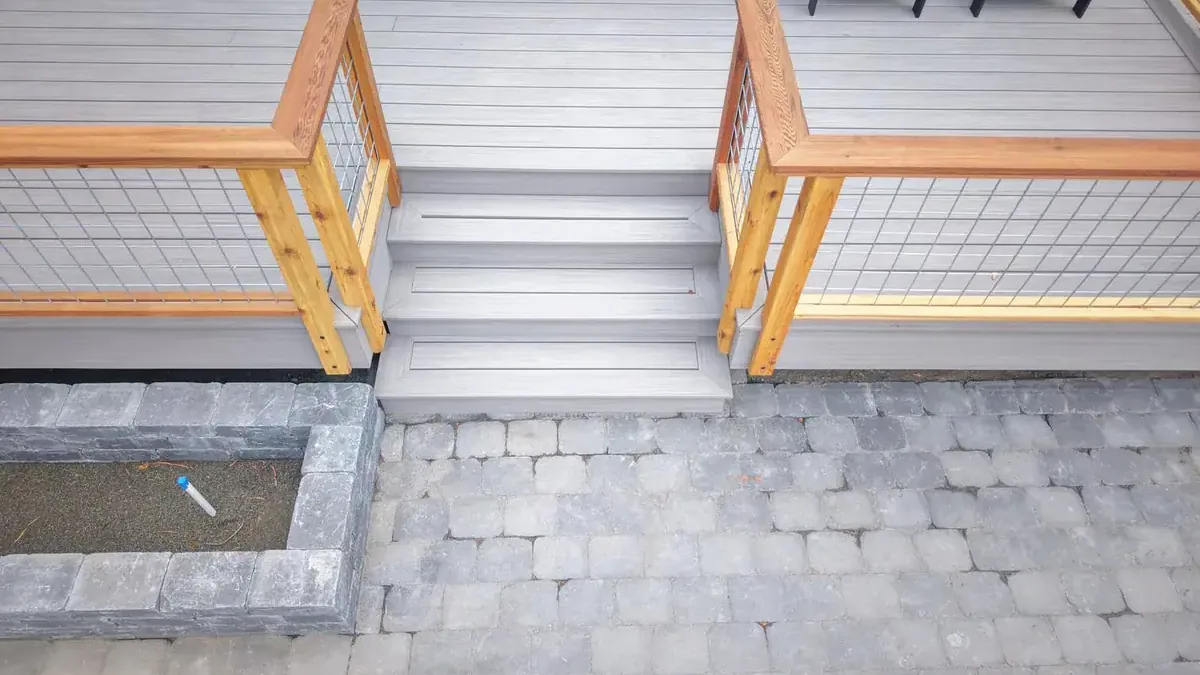
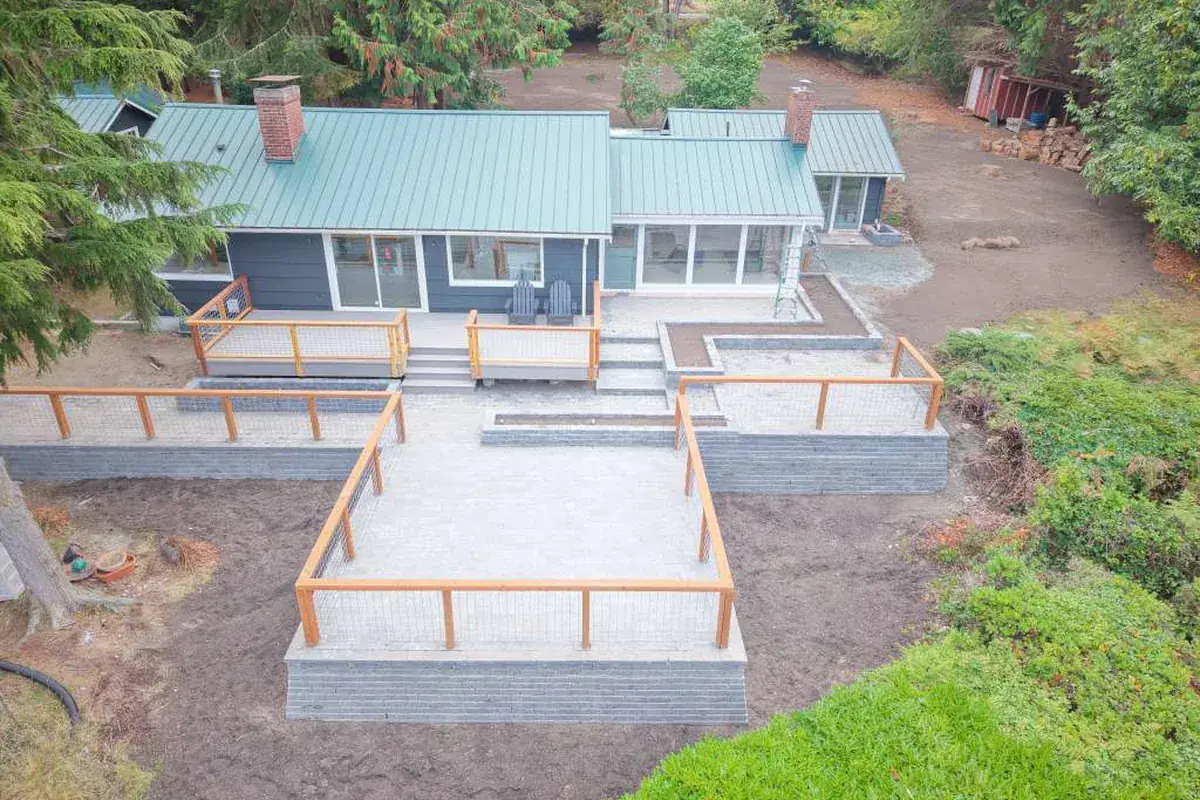
Paver patio installation across Whidbey Island, Camano Island and Skagit County: patios, walkways, landings, raised terraces and sunken patio rebuilds.
Whidbey Dirt Works handles paver patio installation on Whidbey Island, Camano Island and north into Skagit County. We build sand-set concrete paver patios, walkways and paths, plus landings at the foot of deck steps. Raised terraces held up by block walls are part of the work too. Each one starts below the surface, where the base rock and the water path decide how long it stays flat. We are based on the island, out of Langley, so our crew and excavators start the day here.
Paver work covers the surface and everything under it. Our landscape construction page covers steps, planting beds and boulder work. Retaining walls get their own page, including a block wall that holds up a raised patio. A solid slab is a different job, and a poured concrete patio is part of our concrete work. Here we dig, build the base, set the pavers and lock the edges. We also lift and relay paver patios that have sunk or heaved.
Tell us about your project — we’ll get right back to you.
Under the topsoil, much of Whidbey Island is dense glacial till mixed with rock and outwash. Locals call it hardpan. Rain that soaks through the topsoil perches on the till and travels sideways to the low spot. Dig a patio into till and fill it with rock, and you can build that low spot. In the wet months, November through March, water sits in the base. The ground under it softens, and the pavers above it sink or heave.
A paver patio that stays flat has a planned path for water. The finished surface slopes 1/8 to 1/4 inch per foot so rain runs off. Water will not get through the joints unless it is allowed to puddle, so that slope does the work. Water moving sideways through the ground needs its own way out. On a lot like that, a drain line for the wet side of the yard goes in first. Because the same company digs, drains and builds the patio, the base and the water path are planned together.
When you compare paver contractors, ask what goes under the pavers. For a standard sand-set patio, we dig at least 7 inches below the finished surface. Where the subgrade is soft, we dig deeper and add more base rock. The tilt rotator on our excavator trims the subgrade to the same slope as the finished surface. The native soil gets compacted before any base rock goes in. Then 3/4-minus base rock goes down 1 to 2 inches at a time, raked and compacted each lift.
For a standard patio paver, the top of the base stops 3 inches below the finished surface. Any dip in the base gets filled with base rock before the bedding sand goes down. That sand is screeded about 1 inch deep, and the pavers are set on it. Every edge not held by something solid, like a wall or a foundation, gets an edge restraint. A raised terrace is the same build on compacted fill behind a block wall. Our dump trucks haul the dug soil out and the base rock in.
A patio that sinks or heaves has a problem in the base, and the cause is usually water. We lift the pavers and stack them to one side. Then we dig out the failed base and find where the water comes from. It might be a downspout, or water moving sideways on the till. The base goes back in thin compacted lifts of base rock, and fresh bedding sand is screeded on top. Pavers that are still sound go back down on the new base.
The company came out of custom home building on the island, so we plan a patio around the house. We set the surface below the door and slope it away from the foundation. Sometimes that means regrading the yard so water runs away from the house before the patio goes in. On a new build, the patio's grade can be set during excavation and site prep for a new house. We check the county maps with you, and we put a written price on the work.
Free, no-obligation estimates across Whidbey Island & Island County.
(360) 544-9109From the first walkthrough to the final one, here’s exactly how your project runs.
We come out and look at the actual ground: the growth, the slope, the wet spots and the access. We listen to what you want done and give you a clear, written estimate. No pressure, and no guessing at a price over the phone.
We lock in a date, plan equipment access and where the debris goes, and account for drainage, buried utilities, and anything on the property that has to be protected. You know the plan before a machine moves.
Our own crew runs our own machines, and the job is supervised on site. We keep the ground under control, keep you posted, and read what we find as we dig instead of forcing the plan through it.
We walk the finished property with you, deal with the debris the way the plan called for, and leave the ground clean, graded, and draining, ready for whatever you are building next.
Common questions about paver patios across Whidbey Island & Island County. Don't see yours? Give us a call — we're happy to help.
Rockeries, boulder walls, block retaining walls and poured concrete walls, built on a compacted base with drain rock and pipe behind them so the slope stays put.
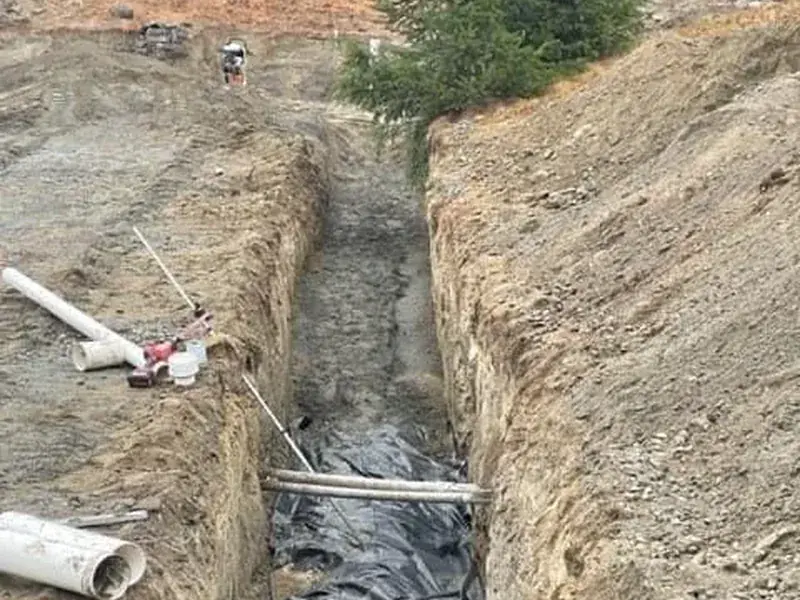
French drains, footing drains, infiltration systems, culverts, and swales, engineered to move water off your property and away from your foundation.
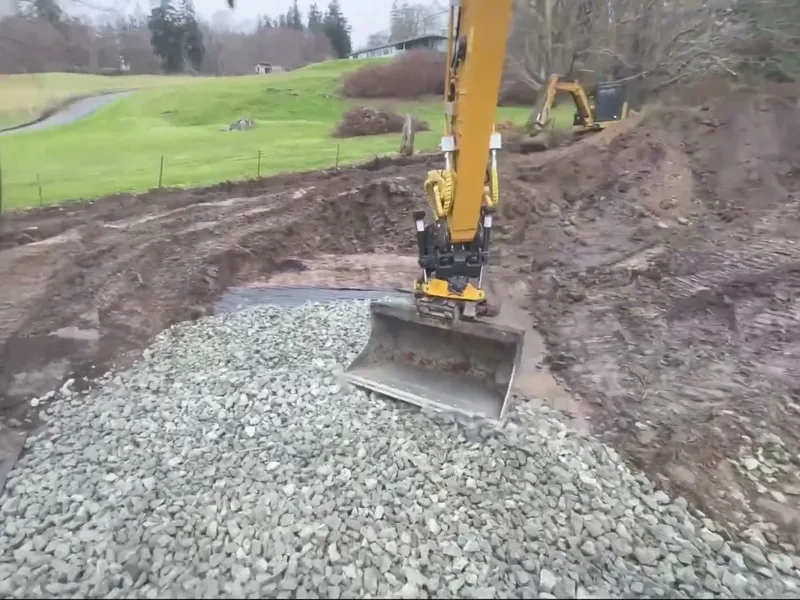
New gravel driveways built from the subgrade up, plus repair and regrading for potholes, ruts and soft spots. Base rock in lifts, crushed rock on top, crowned to shed water.
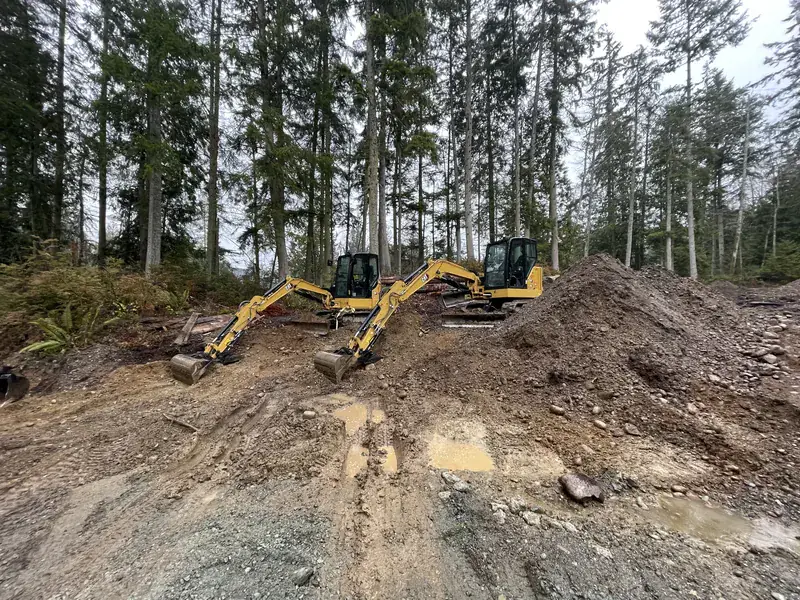
Cut, fill, shape, and finish grade: building pads, yards, and lots left level, compacted, and draining away from what matters.
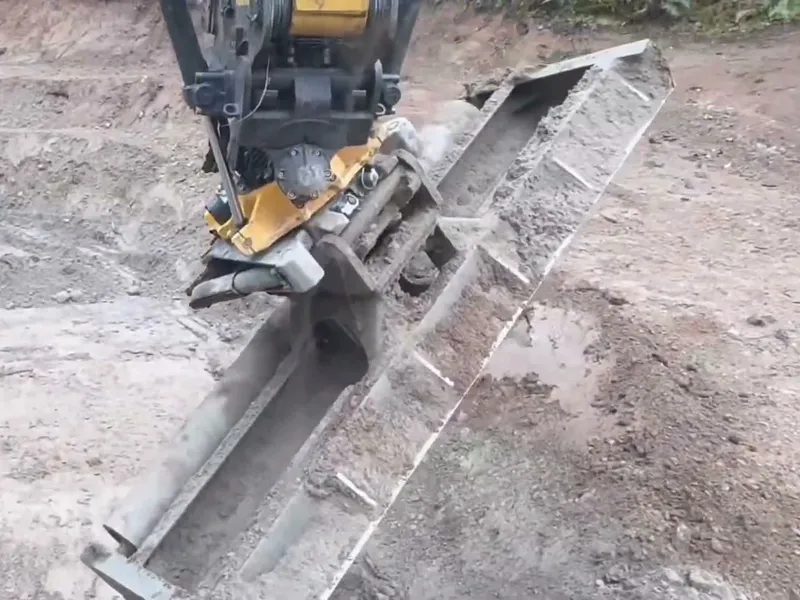
Footings, stem walls, crawlspace foundations, slabs and flatwork. Formed and poured by the same crew that dug the hole and compacted the pad underneath.
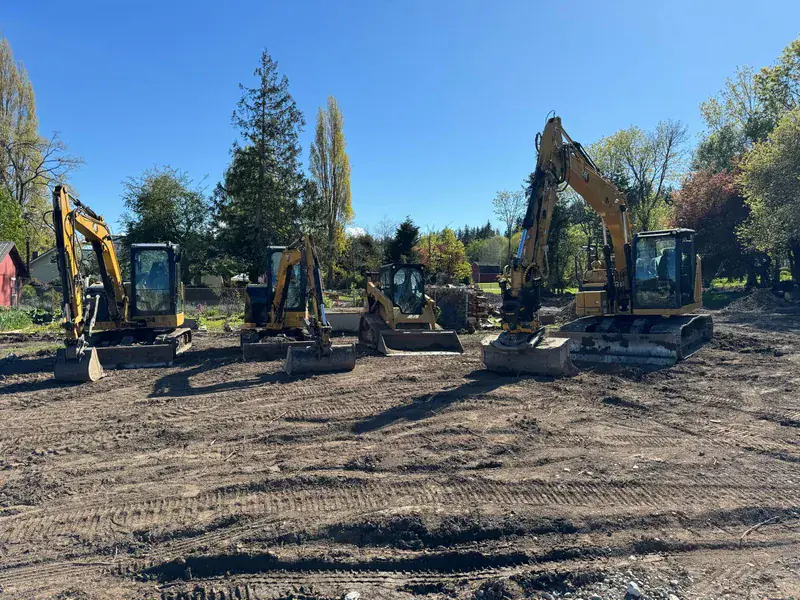
Complete site development: excavation, foundation digs, utilities, access, and prep, handled start to finish by our crew.
Three decades clearing, grading, and digging on Whidbey. Under the topsoil here sit glacial till, hardpan, rock and water that stays where it should not, and our work leaves ground that drains and builds right.
A registered Washington general contractor, bonded and fully insured on every job: a real, accountable company, not a rented machine and a handshake. Your property and your liability are covered.
We look at the ground with you and put a plain-English price in writing, with the whole job in it. We tell you what the job really takes, then we show up and do it.
We live and work here. No ferry delays, no out-of-town crews, no subbing the job out and hoping. One company handles the job from the first call to the final grade, and our own machines and operators do the work.
Straight from the landowners, builders, and neighbors we’ve cleared and graded for.
“Jeff was very professional and finished the job in a timely manner. He exceeded our expectations and did a great job on our driveway! Definitely recommend his company.”
“Jeff did an outstanding job grading my lot, which entailed removal of big stumps. Highly recommend.”
“We had a great experience with Culver Construction. Especially enjoyed the workers that Jeff has. They are very knowledgeable about their work and do a great job.”
Need land cleared, a lot graded, a driveway put in, drainage fixed, or a storm mess hauled off? Reach out for a free, no-obligation estimate. We’ll look at the ground with you, give you a written price, and get your job on the schedule.
Tell us about your project — we’ll get right back to you.